
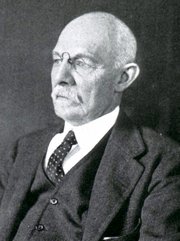




John Marshall (1818 – 1891)
The ligament of Marshall (LOM) is the embryological remnant of the sinus venosus and left cardinal vein. It contains fat, fibrocellular tissues, blood vessels, muscle bundles (bundles of Marshall), autonomic nerve fibers, and some ganglia corresponding to the ganglionated plexuses (plexi) of the heart.
It was first described by John Marshall (1818-1891) in an 1850 paper titled “On the Development of the Great Anterior Veins Man and Mammalia; including an Account of certain remnants of Fœtal Structure found in the Adult, a Comparative View of these Great Veins the different and an Analysis of their occasional peculiarities in the Human Subject”. In this paper, Marshall makes a detailed embryological description of the structures that derive from the left cardinal vein in the human and adds comparative anatomy with other mammalian species.
The left cardinal vein, which originally enters the left side of the sinus venosus, regresses and modifies leaving the following structures in the adult: From superior to inferior they are the brachiocephalic vein, the obliterated duct of Cuvier, the oblique vein of the left ventricle, and the coronary sinus.
The embryological remnant of the left cardinal vein closes and forms a fibrous cord known as the “duct of Cuvier” (named a after French anatomist and naturalist, Baron de la Cuvier (1769 – 1832)). As this fibrous cord crosses the gap between the left pulmonary vein and the left superior pulmonary vein, the visceral pericardium creates a fold over it; that fold is the ligament of Marshall.
In his paper John Marshall calls it the “vestigial fold of the pericardium”. He describes in this fold “a duplicature of the serous layer of the pericardium, including cellular and fatty tissue, the vestigial fold contains some fibrous bands, small blood-vessels and nervous filaments” …” in the interval between the pulmonary artery and vein”.
The image shows the ligament of Marshall (yellow arrow), the left pulmonary artery (LPA), and the left superior pulmonary vein (LSPV). Click on the image for a larger depiction.
Marshall continues his description as the LOM descends toward the heart and states that there is a portion of the left cardinal vein that is total obliterated and sometimes “wanting”. This is the obliterated portion of the duct of Cuvier, which he does not specifically describes in the LOM. In some cases, Marshall says that the duct is absent and replaced by some whitish fibrous streaks crossing the base of the left pulmonary veins. Today we call this the “obliterated portion of the vein of Marshall”.
He then continues describing a small vein that continues towards and opens in the superior aspect of the coronary sinus. This is the patent portion of the duct of Cuvier, and he calls this structure the “small oblique auricular vein”. Today we call this the “oblique vein of the left atrium” or eponymically, the “vein of Marshall”. The coronary sinus is the end portion of the left cardinal vein.
Contemporary studies on the structure of the LOM have described autonomic nerve fibers and aggregations of neuronal bodies (ganglia) on and around the LOM. Also, cardiac musculature extending from the left atrium, and the coronary sinus over the root of the vein of Marshall have been described (bundles of Marshall).
In some cases, the left cardinal vein does not regress and presents in the adult as a “persistent left superior vena cava”. In this case there is no obliterated duct of Cuvier, the oblique vein of the left atrium and coronary sinus are enlarged, and the venous blood from the head and the left upper extremity drains through the coronary sinus into the right atrium. The following image shows a persistent left superior vena cava (yellow arrow), the left atrial appendage (LAA), the left pulmonary artery (LPA), and the left superior pulmonary vein (LSPV). Click on the image for a larger depiction.

Because of the autonomic nerve fibers and ganglia involved, the LOM (and coronary sinus) have been described as being one of the potential foci for atrial fibrillation (AFib) and has become a target for ablation in AFib surgical procedures.
Personal note: My personal thanks to my good friend and contributor to "Medical Terminology Daily", Dr. Randall K. Wolf for the surgical images.
Sources:
1. “On the Development of the Great Anterior Veins Man and Mammalia; including an Account of certain remnants of Fœtal Structure found Adult, a Comparative View of these Great Veins the different and an Analysis of their occasional peculiarities in the Human Subject” Marshall, J. 1850 Phil Trans R Soc 140:133 – 170
2. “The ligament of Marshall: a structural analysis in human hearts with implications for atrial arrhythmias” Kim, D, Lai, A, Hwang, C. et al. JACC. 2000 Oct, 36 (4) 1324–1327.
3. “Myocardium of the Superior Vena Cava, Coronary Sinus, Vein of Marshall, and the Pulmonary Vein Ostia: Gross Anatomic Studies in 620 Hearts” DeSimone CV, Noheria A, Lachman N, Edwards WD, et al. J Cardiovasc Electrophysiol. 2012 Dec; 23(12)
4. “Correlative Anatomy for the Electrophysiologist: Ablation for Atrial Fibrillation. Part I: Pulmonary Vein Ostia, Superior Vena Cava, Vein of Marshall” Macedo PG, Kapa S, Mears JA, Fratianni A, Asirvatham SJ. J Cardiovasc Electrophysiol. 2010 Jun 1;21(6):721-30.
5. “"Human Embryology" WLJ Larsen 1993 Churchill Livingstone
6. “Langman's Medical Embryology" Sadler, T.W. 7ed. Baltimore: Williams & Wilkins, 1995.
7. "Vascular Surgery: A Comprehensive Review" Moore, Wesley S. USA: W.B. Saunders, 1998.
8. Portrait of J. Marshall by Alphonse Legros, Courtesy of Wikipedia. Public Domain.