



Peripheral nerve injuries can result from trauma, compression, thermal damage or systemic diseases, and their classification is essential for diagnosis, management, and prognosis. Three key terms are used to describe the severity and nature of these injuries: neurapraxia, axonotmesis, and neurotmesis. They describe the structural and functional integrity of nerve fibers after injury. The etymology of these terms derives from the Greek language.
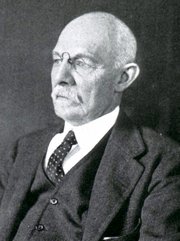
These terms were initially proposed by Sir Herbert John Seddon (1903 – 1977), an English anatomist and orthopedic surgeon who published his initial findings in 1943, followed by Sir Sydney Sunderland (1910 – 1993), an Australian orthopedic surgeon who published a revised classification in 1951. The terms coined by Seddon and Sunderland and their classification system into 5 Grades of Nerve Injury remain central to the treatment of nerve injuries today.
Neurapraxia:
Neurapraxia represents the mildest form of nerve injury. It is characterized by a temporary block of nerve conduction without axonal disruption. Recovery is typically complete and occurs within days to weeks.
• No structural damage to the axon or surrounding connective tissue.
• Localized demyelination may occur, leading to a conduction block.
• Commonly results from compression or mild blunt trauma (e.g., “Saturday night palsy” or a "transient ulnar nerve palsy").
The term is derived from the Greek [νεῦρον] meaning “nerve” and [πρᾶξις] (praxis) meaning “action”. In medical terminology “a” or “an” means “without” or “absence of”. Thus, the word is constructed as [neur]-[a]-[praxia] meaning “absence of nerve function”.

Sir Herbert John Seddon (1903 – 1977)

Sir Sydney Sunderland (1910 – 1993)
Axonotmesis
Axonotmesis is a more severe injury in which the axon is damaged, but the surrounding connective tissue structures (endoneurium, perineurium, and epineurium) remain intact. Wallerian degeneration occurs distal to the lesion, and axonal regeneration following the intact connective tissue channels can allow for not only nerve regeneration but regain of function of the damaged nerve. This is the mechanism of action of cryoneurolysis devices used in surgery.
• Axonal continuity is lost, but the scaffolding remains.
• Regeneration can occur at a rate of approximately 1–3 mm/day.
• Often seen in crush injuries or prolonged compression.
The term is derived from the Greek [ἄξων] meaning “axis” and [τμῆσις], meaning “division” or “cut”. Axonotmesis means “division (cutting) of the axon.”

Augustus Volney Waller (1816 – 1870)
Neurotmesis
Neurotmesis is the most severe form of nerve injury. It involves complete disruption of the axon and surrounding connective tissue, as would happen when a nerve is transected or avulsed. It results in permanent loss of function, since when the axons start to regrow, there are no connective tissue “tunnels” to guide the growing axon to their terminal connections. One of the problems that may happen is the formation of a neuroma or neurinoma at the site of nerve transection.
The only way to attempt to restore function is with surgical intervention bringing the cut ends of the nerves together, sometimes using microsurgery. The results of surgery are not always optimal
• Wallerian degeneration occurs distal to the injury.
• Regeneration is not possible without surgical repair.
• Typically is the result from lacerations, severe traction injuries, or penetrating trauma.
The term is derived from the Greek [νεῦρον] meaning “nerve” and [τμῆσις] meaning “division” or “cut”. Neurotmesis thus translates to “division of the nerve.”
Accurate classification of nerve injuries can help guide prognosis and treatment:
• Neurapraxia: Managed conservatively with physical therapy and observation.
• Axonotmesis: May require surgical exploration if function does not return within expected time frames.
• Neurotmesis: Early surgical intervention is usually necessary to restore any function.

Note: The term “Wallerian degeneration” is associated eponymically with Augustus Volney Waller (1816 – 1870), an English physiologists know for his work on nerve injury and regeneration.
Personal note: Most people talk about "peripheral nerves", as if "central nerves" existed. This is not so. Within the Central Nervous System (CNS) the bundles of axons have different names such as "fascicles" (fasciculus lenticularis), tracts" (spinothalamic tract), lemniscus (medial lemniscus), etc. These central bundles of axons form structures that themselves have separate names, such as the corpus callosum, internal capsule, external capsule, anterior commissure, etc. All of these structures lack a well formed connective tissue wrap, which is the reason why transection of these structures usually does not allow recovery, such as in the case of spinal cord transection.
Nerves, which are only found in the Peripheral Nervous System (PNS). do have a well-formed connective tissue wrap formed by the endoneurium, perineurium, and epineurium. The presence of these connective tissue structures is what allows for nerve regeneration and recuperation of functionality.
To be precise then, using the term "peripheral nerve" is redundant, as all nerves are peripheral! Dr. Miranda
Sources
1. Seddon H. Three Types of Nerve Injury. Brain. 1943;66(4):237-88. doi:10.1093/brain/66.4.237
2. Seddon H, Medawar P, Smith H. Rate of Regeneration of Peripheral Nerves in Man. J Physiol. 1943;102(2):191-215. doi:10.1113/jphysiol.1943.sp004027
3. Sunderland S. A Classification of Peripheral Nerve Injuries Producing Loss of Function. Brain. 1951;74(4):491-516. doi:10.1093/brain/74.4.491
4. O'Brien, M. D., & Wade, D. T. (1992). Neurological rehabilitation. Chapman and Hall.
5. Liddell, H. G., & Scott, R. (1940). A Greek-English Lexicon. Oxford University Press.
6. "The Origin of Medical Terms" Skinner 1970
7. "Dorland's Illustrated Medical Dictionary" 28th Ed. W.B. Saunders. 1994
8. “Stedman’s medical eponyms” Farbis, P; Bartolucci, S. Williams & Wilkins 1998
9. https://radiopaedia.org/articles/sunderland-classification-of-nerve-injury
10. " Correlative Neuroanatomy and Functional Neurology" Chusid, Joseph. Lange Medical Publications
The image of H.J. Seddon is an AI composite of the few images and portraits available. Courtesy OpenAI.