
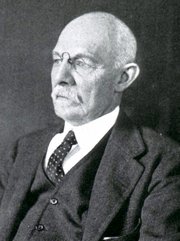



This article is part of the series "A Moment in History" where we honor those who have contributed to the growth of medical knowledge in the areas of anatomy, medicine, surgery, and medical research.

Mark M. Ravitch, MD
Mark M. Ravitch M.D.(1910-1989) American surgeon, historian, teacher, author, innovator, and visionary, Mark Mitchell Ravitch was born in 1910 in New York City. His parents were Russian immigrants, allowing to be fluent in Russian, which opened the doors to one of his many contributions to medicine and surgery: modern surgical stapling.
In 1934, Dr. Ravitch obtained his MD from Johns Hopkins, continuing in the same institution as a surgical intern, and later as a pediatrics resident, where he worked with Dr. Alfred Blalock, eventually becoming a professor of Surgery at Johns Hopkins, moving later to the Baltimore City Hospital. From 1943 to 1946 Dr. Ravitch was a surgeon in the Army.
He moved to the University of Chicago where from 1966 to 1969 he was professor of pediatric surgery and chief of pediatric surgery. His later and last move was to Pittsburgh, where he was professor of surgery at the University of Pittsburgh, and surgeon-in-chief at the Montefiore Hospital in Pittsburgh.
Dr. Ravitch is known for many important contributions to surgery, especially pediatric surgery, where he pioneered a procedure (the eponymic Ravitch procedure) to repair pectum excavatum in children, as well as research and develop a of nonoperative procedure to reduce intussuception using hydrostatic pressure reduction with barium enema. For this and many contributions he is known as one of the founding fathers of pediatric surgery.
A prolific writer and visionary, Dr. Ravitch authored 453 papers, 101 book chapters, 22 books, and served as editor of nearly 20 medical journals. In some of his writings he presented his vision for the development of surgery, even to the point of predicting heart transplantation surgery. Dr. Ravitch also was a surgical historian, with a wonderful library that was donated to the University of Pittsburgh upon his death.
In the medical industry Dr. Mark Ravitch is probably best know for bringing to the USA from the then USSR, the technology of surgical stapling. In 1958, while visiting Kiev, Dr. Ravitch and three other American physicians were shown the use in surgery of a bronchial surgical stapler developed in the USSR. They were able to procure one of these devices and bring it back to the USA. An American entrepreneur, Leon Hirsch, obtained the patents for these devices, founded the United States Surgical Corporation (now the Covidien Surgical Devices Division) and continued the development of the reusable and later the disposable surgical staplers. During the research Dr. Ravitch was joined by Dr. Felicien Steichen (1926 - 2011). Both Drs. Ravitch and Steichen were instrumental in the research and development of these modern surgical devices, making them part of the history of surgical stapling. Their work set the stage for the development of surgical stapling in minimally invasive procedures, so common today.
Dr. Ravitch died in 1989, still teaching students from his own hospital bed. His son Dr. Michael M. Ravitch (1943-2004) followed in his steps in medical education as an educational psychologist at Northwestern University's Feinberg School of Medicine.
Personal notes: I regret not having had the opportunity to meet Dr. Ravitch. In 2006 I spent several hours talking with Dr. Felicien Steichen about his trip to the USSR with Dr. Ravitch and the research and development that happened afterwards. When concluding my visit, Dr. Steichen presented me with a signed copy of his and Dr. Ravitch's book that reads:"Mark Ravitch would have enthusiastically applauded your efforts to teach the science of Anatomy that is the basis of the Art of Surgery". With the loss of both Drs. Ravitch and Steichen a wonderful chapter of the history of surgical stapling has closed.
A few years ago I was contacted by the Ravitch family. Knowing of my interest in Medical History, they donated a series of books signed by Dr. Ravitch. Recently the family also donated the personally typed diary of his trip tp Russia in 1958. They will be well cared and hopefully I will be able to have them printed as a book in the future. Dr. Miranda.
Sources:
1. "Naissance des sutures mecaniques modernes en chirurgie: petites et grandes histoires, en hommage a Mark Ravitch" Steichen,FM Chirurgie 1998,123 (6), 616.
2. "The Peaks of Excitement" Ann Surg 192: (1980) 3, 282 - 287
3. "A Century of Surgery, 1880-1980" Ravitch, Mark M.. Philadelphia
4. "Current Practice of Surgical Stapling" Ravitch, W & Steichen, F. 1991 Lea & Febiger USA
5. "Mark Ravitch (1910 - 1989) Editors, "Current Problems in Surgery" 1989
6. "All heart - Mark Ravitch" O'Donell B. J Ped Surg 25:1 (1990) 184
7. "Mark M. Ravitch: Historian and Innovator" Fingerete, AL, et al. J Surg Ed (2011) 155-158
8. "Reduction of intussusception by barium enema : A clinical and experimental study" Ravitch MM, McCune RM.Ann Surg. 1948;128:904-91
9. "The Surgical Curmudgeon" Pittmed, Spring 2013. 18-23