

Medical Terminology Daily - Est. 2012

Medical Terminology Daily (MTD) is a blog sponsored by Clinical Anatomy Associates, Inc. as a service to the medical community. We post anatomical, medical or surgical terms, their meaning and usage, as well as biographical notes on anatomists, surgeons, and researchers through the ages. Be warned that some of the images used depict human anatomical specimens.

You are welcome to submit questions and suggestions using our "Contact Us" form. The information on this blog follows the terms on our "Privacy and Security Statement" and cannot be construed as medical guidance or instructions for treatment.


We have 616 guests online


A Moment in History

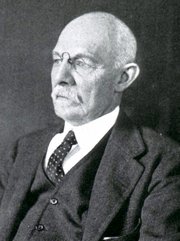
Jean George Bachman

Jean George Bachmann
(1877 – 1959)

French physician–physiologist whose experimental work in the early twentieth century provided the first clear functional description of a preferential interatrial conduction pathway. This structure, eponymically named “Bachmann’s bundle”, plays a central role in normal atrial activation and in the pathophysiology of interatrial block and atrial arrhythmias.

As a young man, Bachmann served as a merchant sailor, crossing the Atlantic multiple times. He emigrated to the United States in 1902 and earned his medical degree at the top of his class from Jefferson Medical College in Philadelphia in 1907. He stayed at this Medical College as a demonstrator and physiologist. In 1910, he joined Emory University in Atlanta. Between 1917 -1918 he served as a medical officer in the US Army. He retired from Emory in 1947 and continued his private medical practice until his death in 1959.

On the personal side, Bachmann was a man of many talents: a polyglot, he was fluent in German, French, Spanish and English. He was a chef in his own right and occasionally worked as a chef in international hotels. In fact, he paid his tuition at Jefferson Medical College, working both as a chef and as a language tutor.

The intrinsic cardiac conduction system was a major focus of cardiovascular research in the late nineteenth and early twentieth centuries. The atrioventricular (AV) node was discovered and described by Sunao Tawara and Karl Albert Aschoff in 1906, and the sinoatrial node by Arthur Keith and Martin Flack in 1907.

While the connections that distribute the electrical impulse from the AV node to the ventricles were known through the works of Wilhelm His Jr, in 1893 and Jan Evangelista Purkinje in 1839, the mechanism by which electrical impulses spread between the atria remained uncertain.

In 1916 Bachmann published a paper titled “The Inter-Auricular Time Interval” in the American Journal of Physiology. Bachmann measured activation times between the right and left atria and demonstrated that interruption of a distinct anterior interatrial muscular band resulted in delayed left atrial activation. He concluded that this band constituted the principal route for rapid interatrial conduction.

Subsequent anatomical and electrophysiological studies confirmed the importance of the structure described by Bachmann, which came to bear his name. Bachmann’s bundle is now recognized as a key determinant of atrial activation patterns, and its dysfunction is associated with interatrial block, atrial fibrillation, and abnormal P-wave morphology. His work remains foundational in both basic cardiac anatomy and clinical electrophysiology.

Sources and references
1. Bachmann G. “The inter-auricular time interval”. Am J Physiol. 1916;41:309–320.
2. Hurst JW. “Profiles in Cardiology: Jean George Bachmann (1877–1959)”. Clin Cardiol. 1987;10:185–187.
3. Lemery R, Guiraudon G, Veinot JP. “Anatomic description of Bachmann’s bundle and its relation to the atrial septum”. Am J Cardiol. 2003;91:148–152.
4. "Remembering the canonical discoverers of the core components of the mammalian cardiac conduction system: Keith and Flack, Aschoff and Tawara, His, and Purkinje" Icilio Cavero and Henry Holzgrefe Advances in Physiology Education 2022 46:4, 549-579.
5. Knol WG, de Vos CB, Crijns HJGM, et al. “The Bachmann bundle and interatrial conduction” Heart Rhythm. 2019;16:127–133.
6. “Iatrogenic biatrial flutter. The role of the Bachmann’s bundle” Constán E.; García F., Linde, A.. Complejo Hospitalario de Jaén, Jaén. Spain
7. Keith A, Flack M. The form and nature of the muscular connections between the primary divisions of the vertebrate heart. J Anat Physiol 41: 172–189, 1907.


 "Clinical Anatomy Associates, Inc., and the contributors of "Medical Terminology Daily" wish to thank all individuals who donate their bodies and tissues for the advancement of education and research”.

Click here for more information


abebooks banner

bookplateink.com


This article is part of the series "A Moment in History" where we honor those who have contributed to the growth of medical knowledge in the areas of anatomy, medicine, surgery, and medical research.
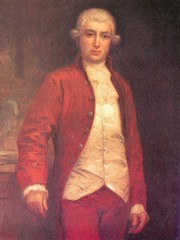
Don Antonio de Gimbernat i Arbos

UPDATED: Don Antonio de Gimbernat y Arbós (1734-1816). Spanish anatomist and surgeon. His complete name was Don Manuel Luis Antonio de Gimbernat y Arbós. He was born to a farmer’s family in 1734 in Cambrils (Tarragona), in what today is Cataluña. Gimbernat studied Latin and Philosophy at the University of Cervera, continuing his studies at the School of Surgery in Cádiz, where he graduated in 1762.

Gimbernat joined the Spanish Navy, but because of this capabilities, in 1765 he was offered the position of Anatomy Professor at the Royal School of Surgery in Barcelona. In 1768 he made an anatomical discovery that would render him immortal: he demonstrated the presence of the lacunar ligament. Furthermore he applied his knowledge of this ligament to improve on the surgical technique to reduce a strangulated femoral hernia. Gimbernat also discovered the lymph node found deep in the femoral ring (later to be known as Cloquet’s or Rosenmueller’s node)

In 1774 Gimbernat traveled through Europe to learn the latest surgical techniques. This trip was sponsored by King Carlos III. During his stay in London Gimbernat studied with John Hunter (1728 – 1793). In an attitude not common for a student at the time, at the end of one of Hunter's anatomical lectures on hernia, Gimbernat asked to go to the cadaver and demonstrate his findings. With approval of the teacher, he demonstrated for Hunter the lacunar ligament as well as his strangulated femoral hernia technique. Hunter watched the demonstration and at the end of it he just said "You are correct, sir".

Hunter was so impressed that from that day on he referred to the lacunar ligament as “Gimbernat’s ligament" and adopted his surgical technique. Gimbernat also showed Hunter his studies and technique to repair diaphragmatic hernias.

Manuel Gimbernat participated in the creation of the Spanish Royal School of Surgery, became a professor of surgery and  orthopedics, and in 1789 he was named First Royal Surgeon and president of all the surgical schools in Spain.

In 1793, Gimbernat published his “ Nuevo Método de Operar en la Hernia Crural” dedicated to King Charles IV,  which was translated as “A New Method of Operating for the Femoral Hernia”, into English in 1795.

In 1803 the Spanish king Carlos IV commissioned Don Francisco Javier de Balmis i Berenguer (1753 – 1819), a Spanish physician, to find a solution to the smallpox problem in the Spanish colonies in South America. While planning what was later to be known as the “Royal Philanthropic Vaccine Expedition” Balmis received critical contributions from Don Manuel Gimbernat.

All of his titles and positions were removed by King Fernando VII because Gimbernat was a supporter of Napoleon during his invasion of Spain in 1808.  Sick, poor, blind, and with ailing mental faculties, Don Manuel Gimbernat died in Madrid on November 17, 1816.

Gimbernat was also a pioneer in ophthalmology, vascular surgery and urology. As for his incredible anatomical dissection capabilities, Gimbernat often said “mi autor más favorito es el cadaver humano" (my favorite author is the human body”

Personal note: My thanks to Dr. José Luis Bueno-López for his correction of the name of Gimbernat: "Although don Antonio de Gimbernat y Arbós was born in a town in Catalonia, Spain, he never wrote his name nor his contemporaries did, with the particle 'i' between his two family names (in the manner of the Catalan language) but with particle 'y' in the way of the Spanish language". There are many articles where Gimbernat's last name is written "Gimbernat i Arbos" (see link #3 on the Source section) which according to Dr. Bueno-López is incorrect. To read the article co-authored by Dr. Bueno-López on Gimbernat (#6 in our Sources section) click here.

Sources:
1. “Manuel Antonio de Gimbernat y Arbós. 1734-1816” Trauma (2012) 23: (1)
2. ” Gimbernat y Arbós, Antonio de (1734-1816) Loukas M et al World J Surg 2007; 31: 855-7
3. “Epónimos médicos: Ligamento de Gimbernat” Febrer JLF 1999
(Link) 
4. “Antonio de Gimbernat (1734- 1816). Anatomist and surgeon” Puig-LaCalle J, Mart?-Pujol R. Arch Surg 1995; 130: 1017- 20
5. “Antonio de Gimbernat, 1734-1816” Matheson NM. Proc R Soc Med 1949; 42: 407-10.
6. "Antonio Gimbernat y Arbós: An Anatomist-surgeon of the Enlightenment (In the 220th Anniversary of his ‘‘A New Method of Operating the Crural Hernia’" Arraez-Aybar LA, Bueno-Lopez JL. Clin Anat (2013) 26:800–809