

Medical Terminology Daily - Est. 2012

Medical Terminology Daily (MTD) is a blog sponsored by Clinical Anatomy Associates, Inc. as a service to the medical community. We post anatomical, medical or surgical terms, their meaning and usage, as well as biographical notes on anatomists, surgeons, and researchers through the ages. Be warned that some of the images used depict human anatomical specimens.

You are welcome to submit questions and suggestions using our "Contact Us" form. The information on this blog follows the terms on our "Privacy and Security Statement" and cannot be construed as medical guidance or instructions for treatment.


We have 867 guests online


A Moment in History

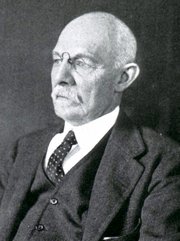
Jean George Bachman

Jean George Bachmann
(1877 – 1959)

French physician–physiologist whose experimental work in the early twentieth century provided the first clear functional description of a preferential interatrial conduction pathway. This structure, eponymically named “Bachmann’s bundle”, plays a central role in normal atrial activation and in the pathophysiology of interatrial block and atrial arrhythmias.

As a young man, Bachmann served as a merchant sailor, crossing the Atlantic multiple times. He emigrated to the United States in 1902 and earned his medical degree at the top of his class from Jefferson Medical College in Philadelphia in 1907. He stayed at this Medical College as a demonstrator and physiologist. In 1910, he joined Emory University in Atlanta. Between 1917 -1918 he served as a medical officer in the US Army. He retired from Emory in 1947 and continued his private medical practice until his death in 1959.

On the personal side, Bachmann was a man of many talents: a polyglot, he was fluent in German, French, Spanish and English. He was a chef in his own right and occasionally worked as a chef in international hotels. In fact, he paid his tuition at Jefferson Medical College, working both as a chef and as a language tutor.

The intrinsic cardiac conduction system was a major focus of cardiovascular research in the late nineteenth and early twentieth centuries. The atrioventricular (AV) node was discovered and described by Sunao Tawara and Karl Albert Aschoff in 1906, and the sinoatrial node by Arthur Keith and Martin Flack in 1907.

While the connections that distribute the electrical impulse from the AV node to the ventricles were known through the works of Wilhelm His Jr, in 1893 and Jan Evangelista Purkinje in 1839, the mechanism by which electrical impulses spread between the atria remained uncertain.

In 1916 Bachmann published a paper titled “The Inter-Auricular Time Interval” in the American Journal of Physiology. Bachmann measured activation times between the right and left atria and demonstrated that interruption of a distinct anterior interatrial muscular band resulted in delayed left atrial activation. He concluded that this band constituted the principal route for rapid interatrial conduction.

Subsequent anatomical and electrophysiological studies confirmed the importance of the structure described by Bachmann, which came to bear his name. Bachmann’s bundle is now recognized as a key determinant of atrial activation patterns, and its dysfunction is associated with interatrial block, atrial fibrillation, and abnormal P-wave morphology. His work remains foundational in both basic cardiac anatomy and clinical electrophysiology.

Sources and references
1. Bachmann G. “The inter-auricular time interval”. Am J Physiol. 1916;41:309–320.
2. Hurst JW. “Profiles in Cardiology: Jean George Bachmann (1877–1959)”. Clin Cardiol. 1987;10:185–187.
3. Lemery R, Guiraudon G, Veinot JP. “Anatomic description of Bachmann’s bundle and its relation to the atrial septum”. Am J Cardiol. 2003;91:148–152.
4. "Remembering the canonical discoverers of the core components of the mammalian cardiac conduction system: Keith and Flack, Aschoff and Tawara, His, and Purkinje" Icilio Cavero and Henry Holzgrefe Advances in Physiology Education 2022 46:4, 549-579.
5. Knol WG, de Vos CB, Crijns HJGM, et al. “The Bachmann bundle and interatrial conduction” Heart Rhythm. 2019;16:127–133.
6. “Iatrogenic biatrial flutter. The role of the Bachmann’s bundle” Constán E.; García F., Linde, A.. Complejo Hospitalario de Jaén, Jaén. Spain
7. Keith A, Flack M. The form and nature of the muscular connections between the primary divisions of the vertebrate heart. J Anat Physiol 41: 172–189, 1907.


 "Clinical Anatomy Associates, Inc., and the contributors of "Medical Terminology Daily" wish to thank all individuals who donate their bodies and tissues for the advancement of education and research”.

Click here for more information


abebooks banner

bookplateink.com


This article is part of the series "A Moment in History" where we honor those who have contributed to the growth of medical knowledge in the areas of anatomy, medicine, surgery, and medical research.

William T. G. Morton.
Click for a larger image

When I started the sidebar segment entitled "A Moment in History", I thought that it would be only biographical articles. On January 28, 2014, traveling from Austin TX to Cincinnati I was reading a wonderful book: "Masters of the Scalpel" (1962) by Sarah R. Riedman Ph.D. In one of the chapters Dr. Riedman writes about the first use of anesthesia in Surgery. Because of the author's style, as I read the following excerpt, I found myself wondering how it would have felt to be there while history was being made:

"On the morning of October 16, 1846, all but one of the principals were ready in the amphitheatre: Dr. Warren, the senior surgeon, his assistants and strong-armed men who were to hold the patient down, the students, and other spectators were waiting; the patient was brought in, pale with fright.

There was no turning back: everything was set for the removal of the tumor on his jaw. Only Morton (Dr. William T. G. Morton) had not arrived. Dr. Warren was ready to proceed without him, announcing to the onlookers: "As Dr. Morton has not arrived, I presume he is otherwise engaged." And he was - putting the finishing touches on his inhaler in the instrument maker's shop.

Just as the skeptical audience burst into laughter at Dr. Warren's remark, Morton appeared. The operation was held up for a few minutes while Morton prepared a sponge soaked in ether which he placed in the inhaling globe, temporarily corked.

As he came forward to the operating table on which the patient was strapped as always before an operation, Dr. Warren turned to Morton, saying: "Well sir! Your patient is ready."

But Morton wished to gain the patient's confidence. Pointing to Eben Frost ( A patient from whom Dr. Morton had removed a tooth under ether) who in gratitude had come along to the hospital, he said to the pale man: "There is a man who has been operated on under this chemical, and can tell you that it worked." Frost gladly complied.

"Are you afraid?" Morton asked the patient. Whether from courage or confidence, the patient replied, "No, I will do as you tell me."

The First Public Demonstration of Surgical Anesthesia at Massachusetts General Hospital
Click for a larger image

Morton then put the neck of the flask to the patient's mouth, instructing him to breathe. Slowly the patient went under, his arms and legs jerking in a way probably familiar to frequenters at "ether frolics." As yet no one suspected what the chemical was. After several minutes, the patient was asleep and relaxed. It was now Morton's cue in the drama, as he turned to Dr. Warren. "Sir, your patient is ready."

Warren made the incision. He, like the witnesses, was ready for the bloodcurdling screams so familiar in the operating room. But the patient uttered not a sound.

The operation over, the patient slowly regained consciousness. When questioned by Morton, he readily admitted having felt no pain.

Dr. Warren then broke the silence with the famous words: "Gentlemen, this is no humbug!" And Dr. Henry J. Bigelow: "I have seen something today that will be heard round the world."

The first page of a new chapter in the story of surgery was turned that day."

While looking out the airplane window to the passing cities below, I thought about the millions of people that had been affected by this "Moment in History" and that it needed to be shared and retold to the generations to follow. 

The operation took place in the first operating room built at the Massachusetts General  Hospital. This room has been preserved and is today known as the "Ether Dome". You can read an article on a visit I made to this historic place. Dr. Miranda

Biographical note: Sarah Regal Riedman was born on April 20, 1902 in Kishiniev, Rumania and became a U.S. citizen in 1918.  In 1926, she received a bachelor's degree from Hunter College, followed by a Masters of Science degree from New York University in 1928. In 1935, Ms. Riedman received her Ph.D. from Columbia University. She taught at Hunter College from 1926 to 1930, and at Brooklyn College from 1930 to 1952. At Brooklyn College, she was an instructor, and later an assistant professor of biology.

Ms. Riedman began writing science books for children in 1947, with the publication of "How Man Discovered His Body". Between 1947 and 1983, she wrote or co- wrote approximately forty books. We have not been able to find further information on her. Any contribution to her biography will be most welcome.

Original image (public domain) courtesy of NLM