
Medical Terminology Daily - Est. 2012

Medical Terminology Daily (MTD) is a blog sponsored by Clinical Anatomy Associates, Inc. as a service to the medical community. We post anatomical, medical or surgical terms, their meaning and usage, as well as biographical notes on anatomists, surgeons, and researchers through the ages. Be warned that some of the images used depict human anatomical specimens.

You are welcome to submit questions and suggestions using our "Contact Us" form. The information on this blog follows the terms on our "Privacy and Security Statement" and cannot be construed as medical guidance or instructions for treatment.


We have 905 guests online


A Moment in History

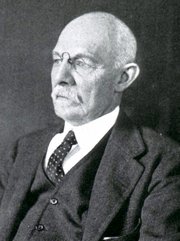
Jean George Bachman

Jean George Bachmann
(1877 – 1959)

French physician–physiologist whose experimental work in the early twentieth century provided the first clear functional description of a preferential interatrial conduction pathway. This structure, eponymically named “Bachmann’s bundle”, plays a central role in normal atrial activation and in the pathophysiology of interatrial block and atrial arrhythmias.

As a young man, Bachmann served as a merchant sailor, crossing the Atlantic multiple times. He emigrated to the United States in 1902 and earned his medical degree at the top of his class from Jefferson Medical College in Philadelphia in 1907. He stayed at this Medical College as a demonstrator and physiologist. In 1910, he joined Emory University in Atlanta. Between 1917 -1918 he served as a medical officer in the US Army. He retired from Emory in 1947 and continued his private medical practice until his death in 1959.

On the personal side, Bachmann was a man of many talents: a polyglot, he was fluent in German, French, Spanish and English. He was a chef in his own right and occasionally worked as a chef in international hotels. In fact, he paid his tuition at Jefferson Medical College, working both as a chef and as a language tutor.

The intrinsic cardiac conduction system was a major focus of cardiovascular research in the late nineteenth and early twentieth centuries. The atrioventricular (AV) node was discovered and described by Sunao Tawara and Karl Albert Aschoff in 1906, and the sinoatrial node by Arthur Keith and Martin Flack in 1907.

While the connections that distribute the electrical impulse from the AV node to the ventricles were known through the works of Wilhelm His Jr, in 1893 and Jan Evangelista Purkinje in 1839, the mechanism by which electrical impulses spread between the atria remained uncertain.

In 1916 Bachmann published a paper titled “The Inter-Auricular Time Interval” in the American Journal of Physiology. Bachmann measured activation times between the right and left atria and demonstrated that interruption of a distinct anterior interatrial muscular band resulted in delayed left atrial activation. He concluded that this band constituted the principal route for rapid interatrial conduction.

Subsequent anatomical and electrophysiological studies confirmed the importance of the structure described by Bachmann, which came to bear his name. Bachmann’s bundle is now recognized as a key determinant of atrial activation patterns, and its dysfunction is associated with interatrial block, atrial fibrillation, and abnormal P-wave morphology. His work remains foundational in both basic cardiac anatomy and clinical electrophysiology.

Sources and references
1. Bachmann G. “The inter-auricular time interval”. Am J Physiol. 1916;41:309–320.
2. Hurst JW. “Profiles in Cardiology: Jean George Bachmann (1877–1959)”. Clin Cardiol. 1987;10:185–187.
3. Lemery R, Guiraudon G, Veinot JP. “Anatomic description of Bachmann’s bundle and its relation to the atrial septum”. Am J Cardiol. 2003;91:148–152.
4. "Remembering the canonical discoverers of the core components of the mammalian cardiac conduction system: Keith and Flack, Aschoff and Tawara, His, and Purkinje" Icilio Cavero and Henry Holzgrefe Advances in Physiology Education 2022 46:4, 549-579.
5. Knol WG, de Vos CB, Crijns HJGM, et al. “The Bachmann bundle and interatrial conduction” Heart Rhythm. 2019;16:127–133.
6. “Iatrogenic biatrial flutter. The role of the Bachmann’s bundle” Constán E.; García F., Linde, A.. Complejo Hospitalario de Jaén, Jaén. Spain
7. Keith A, Flack M. The form and nature of the muscular connections between the primary divisions of the vertebrate heart. J Anat Physiol 41: 172–189, 1907.


 "Clinical Anatomy Associates, Inc., and the contributors of "Medical Terminology Daily" wish to thank all individuals who donate their bodies and tissues for the advancement of education and research”.

Click here for more information


abebooks banner

bookplateink.com


This article is part of the series "A Moment in History" where we honor those who have contributed to the growth of medical knowledge in the areas of anatomy, medicine, surgery, and medical research.

If you arrived directly to this article, the first article in this three-page series can be read HERE
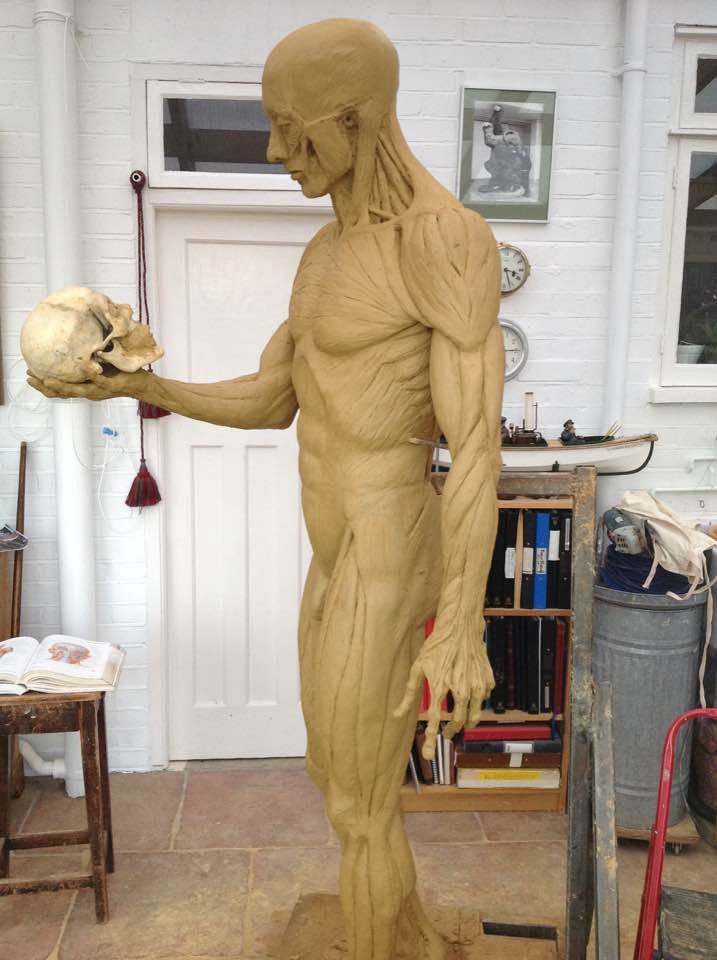
Sculpting the monument in Richard Neave’s studio

One of the most important conferences that BIOMAB initiated and co-organized was without  doubt “Vesalius Continuum” which took place in 2014 on the island of Zakynthos  . This joint AEIMS conference was organized in collaboration with Dr Mark Gardiner and the then Consul at the Belgian Embassy in Greece - Theo Dirix, and brought together many prominent scholars and Vesalius experts who presented papers on the life, work and death of Vesalius, and the influence of the Fabrica on modern anatomy, and on medical art and contemporary art (pdf file).

Without the organizing skills and drive and energy of Dr. Mark Gardiner and the countless meetings and emails with Theo Dirix, the conference Vesalius Continuum would not have been the huge world class event it became.

In 2013 Dr. Mark Gardiner and I first introduced ourselves to Professor Vivian Nutton who was giving a lecture at Warwick University about the incredible find of a hand written (by Vesalius himself !) edited version of the Fabrica’s second edition, which would have become the third edition, …had Vesalius not met his untimely death. Mark and I were blown away by this wonderfully exciting lecture and we asked Professor Nutton to be a speaker at our conference in 2014, which he accepted gladly. He was invited again in 2017 for the triennial and has now especially for this publication written an exciting account of Vesalius in England, 1544 to 1547.

Vesalius’s 500 th anniversary celebrations did not end with the organization of the conference, but became a collection of several events.

My colleague and dear friend forensic medical artist Richard Neave and I sculpted a bronze monument to commemorate Vesalius’s death on the Island of Zakynthos on 15th Oct 1564. This monument might never have been erected if it were not for the wonderful idea of  Antwerp GP and president of Vesaliana Dr Marc de Roeck together with William Nagels, who devised a way of self-funding this large undertaking. We had countless meetings discussing the monument and agreed with Dr. de Roeck that by making a bronze facial reconstruction portrait (made by Richard Neave and myself) and selling 12 copies we would gather enough money together to make the monument, pay to have it cast in Bronze and drive the sculpture from Belgium to Zakynthos ready to have its grand inauguration at the start of the conference. This was all achieved successfully and the sculpture now stands on the Island of Zakynthos’s Vesalius square, facing the Ionian sea.
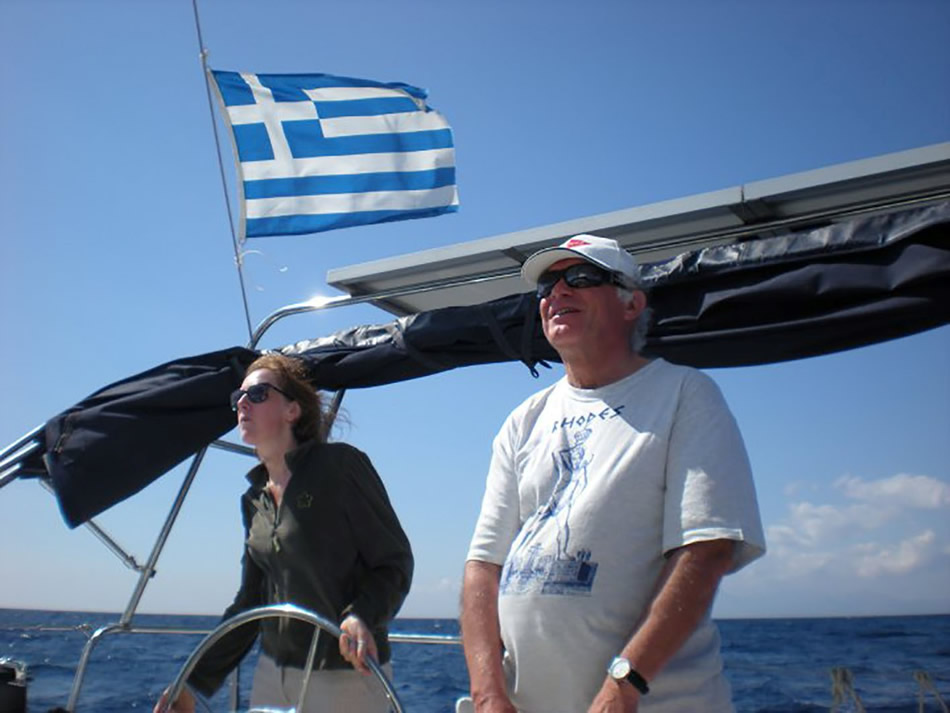
Dr. Marc De Roeck and Pascale Pollier sailing to Zakynthos
Dr. Marc De Roeck and Pascale Pollier
sailing to Zakynthos

In 2009 I had completed a facial reconstruction course at the academy of fine arts in Maastricht , the Netherlands, and as Vesalius had always been my big inspiration and the reason why I chose to become a medical artist,  it was my dream to make a facial reconstruction of Vesalius. The dream soon turned into a passion, and the passion into an obsession to go in search of the grave of Vesalius and find his skull.
Ann suggested to Marc we sailed to Zakynthos with the MYC-Medical Yachting Club to start the quest for the grave. I will never forget the day that Marc gave me the ships wheel as we got closer to the island and I sailed into the harbor of Zakynthos! An amazing feeling!

After our first visit to “what we thought then was the grave site“ at Laganas, I wrote a letter to the Belgian embassy in Greece, asking for help with our quest,  a year later when Theo Dirix took office as Consul he wrote back to me, my letter had ignited a flame in the heart of taphophile Theo Dirix.

Soon the quest became an official scientific research collaborative project between the Belgian School of Athens (Jan Driessen, Apostolis Sarris, Sylviane Déderix) and the Greek authorities, together with the invaluable research of Omer Steeno, Maurits Biesbrouk and Theodoor Godeeris, who all share their latest findings in this book. With this wonderful collaborative effort, even though we have not yet found the actual grave, we can truly claim that we have made some history.

Theo Dirix wrote 2 books on the quest of the grave and now will reveal some new insights with his article  in the book “In the Shadow of Vesalius”.

This article continues HERE