
Medical Terminology Daily (MTD) is a blog sponsored by Clinical Anatomy Associates, Inc. as a service to the medical community. We post anatomical, medical or surgical terms, their meaning and usage, as well as biographical notes on anatomists, surgeons, and researchers through the ages. Be warned that some of the images used depict human anatomical specimens.
You are welcome to submit questions and suggestions using our "Contact Us" form. The information on this blog follows the terms on our "Privacy and Security Statement" and cannot be construed as medical guidance or instructions for treatment.
We have 1047 guests online
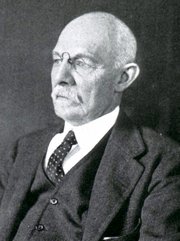
William S. Halsted, MD
(1852 – 1922)
American anatomist, teacher, and surgeon, William Stewart Halsted was born in New York City, USA to a wealthy family of English origin. His father was involved in charitable work and Governor and trustee to a city hospital. Not a brilliant student initially, Halsted took an undergraduate in Liberal Arts in Yale, CT., after which he entered the Medical College of Physicians at the Columbia College, where he excelled.
As a second-year medical student Halsted applied and obtained a position in surgery at a local hospital. In here he learned about Lister’s antiseptic technique and became an adamant proponent of it to reduce infection. In 1877 Halsted obtained his MD. After a short time as House Physician at the New York Hospital, Halsted traveled to Europe to further his education studying for two years at the Universities of Vienna, Leipzig, and W?rzburg.
Besides being at the forefront of surgical and antiseptic techniques (introducing the use of rubber gloves in surgery), Halsted was extremely concerned with the way medical students were taught in the US. He pioneered bedside clinical round discussions with the medical students after two years of basic sciences studies. Halsted developed the idea of a patient chart; he also developed the residency program for medical students in use today.
Halsted is probably the most influential researcher and surgeon at the turn of the century. He dedicated time to the study of intestinal anastomoses and the use of silk as a suture material. His experimental work in 1887 proved that the inclusion of the submucosa layer in an anastomosis was mandatory, as well that a single layered anastomosis was enough to attain closure. Perhaps Halsted’s most important contribution was the application and use of the scientific method to surgical questions. Halsted’s principles, also known as "Halsted's Rules of Surgery", set the standards used today in surgical suturing and surgical stapling.
He also pioneered the development and surgical techniques for radical mastectomy as a treatment for breast cancer.
As a side effect of this studied in anesthesia and the use of cocaine for anesthesia, Halsted became addicted to this substance, a problem that followed him through the years. Without impairing his capacity as a researcher and a surgeon, Halsted eventually recovered. He died in Baltimore in 1922 as a complication to surgery.
Sources:
1. Dubay, A. D., & Franz, G. M. (2003). Acute Wound Healing: The Biology of Acute Wound Failure. Surg Clin NA, 83, 463-481.
2. Halsted, W. S. (1887). Circular Suture of the Intestine - An Experimental Study. Am J Med Sci, 436-461.
3. “William Stewart Halsted: his life and contributions to surgery” Osborne, P. Lancet Oncol 2007; 8: 256–65
4. “William Stewart Halsted: Surgical pioneer” Burress, P Endoc Today (2010), 8: (2) 22
5. “William Stewart Halsted (1852–1922) Neurological stamp” Haas, LF J Neurol Neurosurg Psych 2000;69:641
Original image courtesy of "Images from the History of Medicine" at www.nih.gov

"Clinical Anatomy Associates, Inc., and the contributors of "Medical Terminology Daily" wish to thank all individuals who donate their bodies and tissues for the advancement of education and research”.
Click here for more information


- Details
The prefix [-poly-] arises from the Greek word [πολλοί] (poli/pola) meaning "many". This is a widely used prefix in medical terminology as well as in everyday English. Applications of this prefix include:
- Polymorphous: Many shapes or forms
- Polycystic: Many cysts
- Polymyalgia: Pain in many muscles
- Polycythemia: The root term [-cyt-] means "cell", and the suffix [-emia] means "blood". Many cells in the blood, the opposite of "anemia"
- Polydactyly: The root term [-dactyl-] means "fingers", polydactyly is a condition where the patient has more fingers than normal
Note: The links to Google Translate include an icon that will allow you to hear the Greek or Latin pronunciation of the word.
- Details
The word [uncus] is of Latin origin and means "hook", or "curved". Its plural form is [unci]. In human anatomy we refer to hooked structures as "uncus". The the uncus of the pancreas is a hooked end segment of the head of the pancreas that curves around the superior mesenteric artery and vein. There is also the uncus of the parahippocampal gyrus, and others
The derivate root term [-unci-] gives us the adjectival form [unciform] meaning "with the shape of a hook". Applications of this root term include:
• Uncinate process of the pancreas
• Uncinate vertebral process, found in cervical vertebrae 3 to 7.
• Uncinate process of the ethmoid bone
• Uncinate gyrus, referring to the uncus of the parahippocampal gyrus
- Details
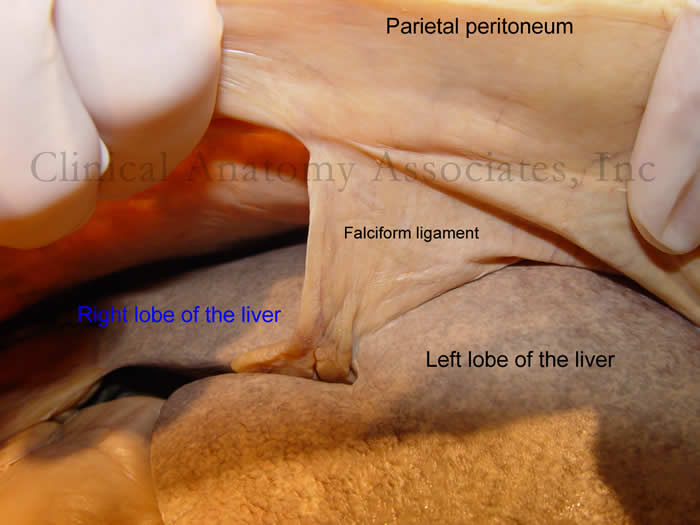
Click for a larger image
UPDATED: The term [ligament] in the abdominopelvic region has a very different meaning from the term [ligament] referring to a tendon-like structure associated with a joint. This is one of the terms that is used in different locations with different meaning.
The term [ligament] in the abdominopelvic region refers to a fold of peritoneum over an underlying structure or to a reduplication of the peritoneum. This is extremely important, as most abdominopelvic "ligaments" have a content that could be endangered through surgical manipulation.
There are many ligaments in the abdomen and pelvis. Following is a list of some of them:
- Infundibulopelvic ligament
- Ligament of Treitz
- Falciform ligament
- Round ligament of the uterus
- Median umbilical ligament
- Suspensory ligament of the sigmoid colon, etc
- Details
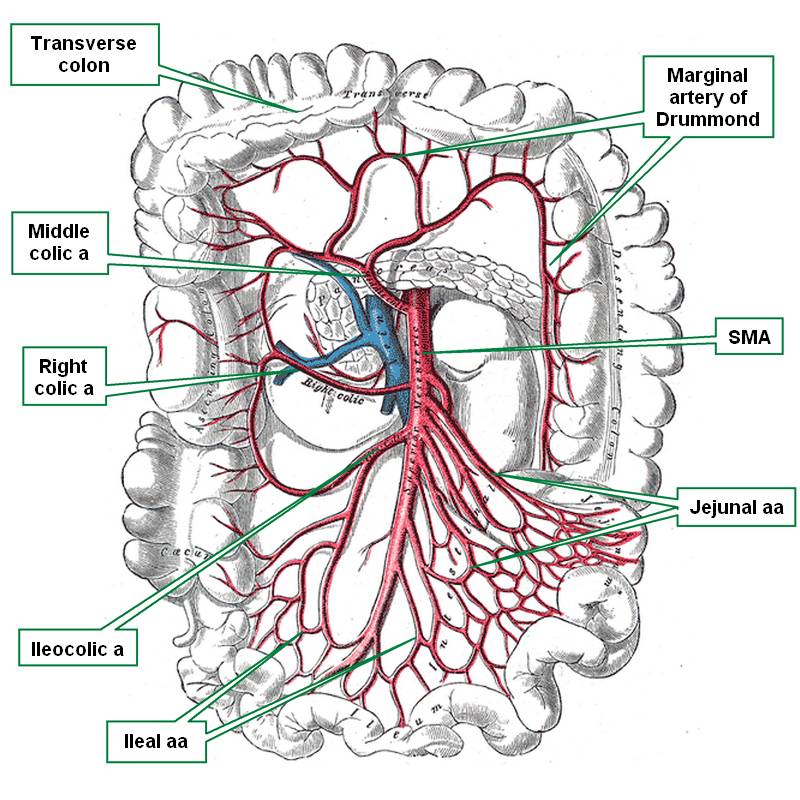
Click for a larger image
The superior mesenteric artery (SMA) is one of the anterior unpaired branches of the abdominal aorta. It is close to one centimeter in diameter at its origin and is about 15 centimeters in length. At its origin, just inferior to the celiac trunk, it is directed anteroinferiorly, hugged by the head and uncinate process of the pancreas. The SMA passes over the transverse (3rd segment) of the duodenum where it is accompanied by the inferior mesenteric vein.
The SMA provides supply to the duodenum, jejunum, ileum, the right side of the colon (cecum, vermiform appendix, and ascending colon), and the transverse colon. The jejunal and ileal arteries traverse within the layers of the mesentery.
As the SMA passes over the third portion of the duodenum, and because of the angle formed between the SMA and the abdominal aorta, it slightly compresses the duodenum. In very rare cases, this angle can be so acute as to cause duodenal obstruction requiring surgery. This rare syndrome is called “SMA compression syndrome” was first described in 1861 by Baron Carl Freiherr Von Rokitansky (1804 -1878). To see an article with a better image of the SMA-abdominal aorta angle click here.
- Details
This article is part of the series "A Moment in History" where we honor those who have contributed to the growth of medical knowledge in the areas of anatomy, medicine, surgery, and medical research.
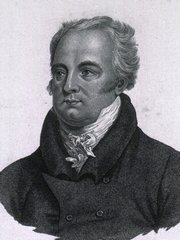
Sir Astley Paston Cooper
Sir Astley Paston Cooper (1768 - 1841). An English anatomist and surgeon, Astley Cooper started his medical studies when he was only 16, at the St. Thomas hospital in London. He studied under Henry Cline, and later under John Hunter. Astley Cooper was a well-known anatomist, lecturer, and surgeon in his time. He is known for his many studies in abdominal hernia, otology, aneurysms, and the anatomy and diseases of the breast. In 1804 he described the abdominal transversalis fascia and the internal inguinal ring.
Born in the village of Brooke, Norfolk. At 16 years of age he was placed under the tutelage of Henry Cline (1750 - 1827), senior surgeon at the St. Thomas hospital in London for a seven-year apprenticeship. In 1789 he was appointed as an anatomy lecturer at the same hospital. In 1800 Cooper was appointed Surgeon to the Guy's Hospital in London.
He was the first to attempt the ligation of the abdominal aorta in a patient that had suffered an aortic abdominal aneurysm rupture. The patient survived for one additional day. "Astley Cooper introduced no new philosophy, policy or practice into surgery but was the perfect exponent of the scientific approach to surgery combined with skillful and successful practical ability" Brock (1969)
Cooper’s name survives in several eponymous anatomical structures and diseases he described, following are two of them:
• Cooper's ligaments of the breast: Connective tissue ligamentous strands between the pectoral fascia and the skin overlying the breast. (although it was first described by Andrea Vesalius).
• Cooper's pectineal ligament: A thickening of the periosteum on the superior aspect of the pubic bone, lateral to the pubic tubercle. This structure is a preferred site for staple positioning during a laparoscopic herniorrhaphy. When placing the staples, consideration should be placed on the potential presence of an anatomical vascular variation named the "Corona Mortis".
Although Cooper published a number of books and research papers, his seminal contribution to surgery was his two-volume "Treatise on Hernia". The first volume was published in 1795 and the second volume in 1807, with a revised second edition published in 1827.
Personal note: Although Sir Astley Cooper has been credited with the first description of the complex mammary suspensory ligaments (Cooper's ligaments), a 2016 paper by Brinkman and Hage (see Sources) contests this and gives Andreas Vesalius the honor of describing these structures nearly 300 years before Cooper! Dr. Miranda.
Sources:
1. "Sir Astley Paston Cooper." Singal, R. et al. Indian J Surg 73:1 (2011): 82-84.
2. "Sir Astley Paston Cooper, 1768-1841:the prince of surgery"Rawling, EG. Can Med Assoc J 99.5 (1968): 221.
3. "The life and work of Sir Astley Cooper" Brock, RC. Ann Royal Coll Surg England 44.1 (1969): 1-18
4. "Andreas Vesalius’ 500th Anniversary: First Description of the Mammary Suspensory Ligaments" Brinkman, RJ; Hage JJ. World J Surg (2016) 40:2144–2148
- Details
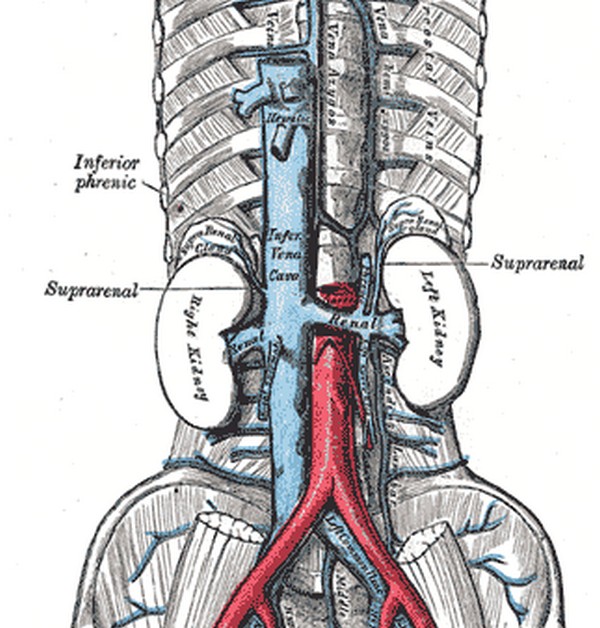
Click for a larger image
The inferior vena cava (IVC) in one of the great vessels. It brings deoxygenated blood from the lower extremities, pelvis, and areas of the abdomen to the right atrium of the heart.
As a side note, the blood returning from the digestive system does not usually enter the IVC. It has it its own venous subsystem converging into the liver by way of the portal vein.
The IVC is formed by the confluence of the right and left common iliac veins. This lower end of the inferior vena cava is found anterior to the L4-L5 intervertebral disc. The IVC covers the superior aspect of the body of L5.
The IVC ascends to the right of the abdominal aorta and anterolateral to the vertebral bodies. It receives several branches as it passes superiorly:
• Common iliac veins
• Lumbar veins
• Gonadal veins
• Renal veins
• Right suprarenal veins
• Hepatic veins
• Inferior phrenic veins
As the IVC passes posterior to the liver, it is hugged by the mass of the posterior aspect of the liver, it will receive the hepatics veins, and pass through the IVC hiatus of the respiratory diaphragm, entering immediately into the right atrium of the heart. At this point the IVC will present an incomplete venous valve known as the Eustachian valve, named after Bartolomeo Eustachius (c1500 - 1574).
Sources:
1. "Tratado de Anatomia Humana" Testut et Latarjet 8 Ed. 1931 Salvat Editores, Spain
2. "Gray's Anatomy" 38th British Ed. Churchill Livingstone 1995
3. "Reconstructive Anatomy: A Method for the Study of Human Structure: Arnold, M WB Saunders1968
Image modified from the original by Henry VanDyke Carter, MD. Gray's Anatomy.