
Medical Terminology Daily (MTD) is a blog sponsored by Clinical Anatomy Associates, Inc. as a service to the medical community. We post anatomical, medical or surgical terms, their meaning and usage, as well as biographical notes on anatomists, surgeons, and researchers through the ages. Be warned that some of the images used depict human anatomical specimens.
You are welcome to submit questions and suggestions using our "Contact Us" form. The information on this blog follows the terms on our "Privacy and Security Statement" and cannot be construed as medical guidance or instructions for treatment.
We have 1051 guests online
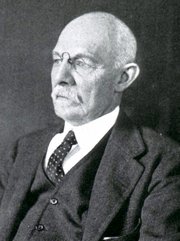
William S. Halsted, MD
(1852 – 1922)
American anatomist, teacher, and surgeon, William Stewart Halsted was born in New York City, USA to a wealthy family of English origin. His father was involved in charitable work and Governor and trustee to a city hospital. Not a brilliant student initially, Halsted took an undergraduate in Liberal Arts in Yale, CT., after which he entered the Medical College of Physicians at the Columbia College, where he excelled.
As a second-year medical student Halsted applied and obtained a position in surgery at a local hospital. In here he learned about Lister’s antiseptic technique and became an adamant proponent of it to reduce infection. In 1877 Halsted obtained his MD. After a short time as House Physician at the New York Hospital, Halsted traveled to Europe to further his education studying for two years at the Universities of Vienna, Leipzig, and W?rzburg.
Besides being at the forefront of surgical and antiseptic techniques (introducing the use of rubber gloves in surgery), Halsted was extremely concerned with the way medical students were taught in the US. He pioneered bedside clinical round discussions with the medical students after two years of basic sciences studies. Halsted developed the idea of a patient chart; he also developed the residency program for medical students in use today.
Halsted is probably the most influential researcher and surgeon at the turn of the century. He dedicated time to the study of intestinal anastomoses and the use of silk as a suture material. His experimental work in 1887 proved that the inclusion of the submucosa layer in an anastomosis was mandatory, as well that a single layered anastomosis was enough to attain closure. Perhaps Halsted’s most important contribution was the application and use of the scientific method to surgical questions. Halsted’s principles, also known as "Halsted's Rules of Surgery", set the standards used today in surgical suturing and surgical stapling.
He also pioneered the development and surgical techniques for radical mastectomy as a treatment for breast cancer.
As a side effect of this studied in anesthesia and the use of cocaine for anesthesia, Halsted became addicted to this substance, a problem that followed him through the years. Without impairing his capacity as a researcher and a surgeon, Halsted eventually recovered. He died in Baltimore in 1922 as a complication to surgery.
Sources:
1. Dubay, A. D., & Franz, G. M. (2003). Acute Wound Healing: The Biology of Acute Wound Failure. Surg Clin NA, 83, 463-481.
2. Halsted, W. S. (1887). Circular Suture of the Intestine - An Experimental Study. Am J Med Sci, 436-461.
3. “William Stewart Halsted: his life and contributions to surgery” Osborne, P. Lancet Oncol 2007; 8: 256–65
4. “William Stewart Halsted: Surgical pioneer” Burress, P Endoc Today (2010), 8: (2) 22
5. “William Stewart Halsted (1852–1922) Neurological stamp” Haas, LF J Neurol Neurosurg Psych 2000;69:641
Original image courtesy of "Images from the History of Medicine" at www.nih.gov

"Clinical Anatomy Associates, Inc., and the contributors of "Medical Terminology Daily" wish to thank all individuals who donate their bodies and tissues for the advancement of education and research”.
Click here for more information


- Details
The medical suffix [-(o)rrhea] has a Greek origin and means "flow" or "discharge". The term is used in many medical words. Applications of this root term include:
- Galactorrhea: The root term [-galact-] means "milk". Milk discharge
- Agalactorrhea: The suffix [a-] means "without" or "absence". Absence of milk discharge
- Diarrhea: The root term [-dia] means "complete" or "trough". The word needs no explanation
- Amenorrhea: The root term [-men-)] means "menses". Absence of menstrual flow
- Dacryohemorrhea: A bloody flow of tears
- Details
The root term [dactly-] originates from the Greek [δάχτυλο] (dactylos) meaning "finger", also used for "toe". Applications of this term include:
- Dactylitis: The suffix [-itis] means "inflammation" or "infection. Inflammation or infection of a finger or a toe
- Dactyledema: A swelling of the fingers or toes
- Dactylomegaly: The suffix [-(o)megaly] means "enlargement". An abnormally large finger(s) or toe(s)
- Dactylospasm: Cramping of the finger(s) or toe(s)
- Dactyloscopy: Literally "to view the fingers". The science that studies fingerprints, first proposed by Sir William Herschel and Francis Galton, the system for dactyloscopy as a modern police investigative device was created by Juan Vucetich (1858 - 1925) in Argentina
Note: The links to Google Translate include an icon that will allow you to hear the Greek or Latin pronunciation of the word.
- Details
The suffix [-ema] means "condition", as in "disease" or "pathology". Applications of this suffix include:
- Erythrema: The root term [erythr-] means "red". A condition of redness
- Emphysema: The root term [-emphys-] means "to blow" or "to dilate". A dilated condition
- Empyema: The root term [-py(o)] means "pus" as a result of an infection. A condition of pus
- Details
This article is part of the series "A Moment in History" where we honor those who have contributed to the growth of medical knowledge in the areas of anatomy, medicine, surgery, and medical research.
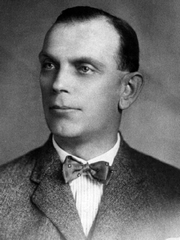
Dr. Aladar Petz
Dr. Aladár Petz (1888 – 1956) Hungarian surgeon, Aladár Petz was born in 1888 in the city of Gyôr. He studied medicine at the P?ter P?zm?ny University in Budapest. In 1922 he was appointed Chief of the Surgical Department at the Holy Trinity Hospital in Gyôr. During WWI Dr. Petz served as a military surgeon.
In 1920 Dr. Petz created an improvement to the original surgical stapler developed by Dr. Húmer Húltl (1868 – 1940). The original Húltl instrument was very heavy and bulky. Petz’s instrument was lighter, easier to use and added mechanical improvements over the original. After obtaining the patent for the instrument, Petz’s device was commercialized under the instrument device company name “Aesculap”. Both Húltl and Petz called their devices “Magendarmnahtapparat” = gastrointestinal suture apparatus. This instrument was the basis of the surgical stapler research and development that happened later in the USSR in the early 1900's. Dr. Petz and his "Von Petz" stapler are an integral part of the history of surgical stapling.
Although his Hungarian name was Aladar Petz, his name is better known by the German version Aladár Von Petz. Because of his long tenure as Chief of Surgery, Hospital Manager, and his special dedication to saving the hospital during WWII, his name is remembered at the Alad?r Petz Teaching Hospital of Gyôr in Hungary.
Sources:
1. “Aladár Petz, the inventor of the modern surgical staplers” Ol?h, A. Surgery 2008;143:146-147
2. “Current Practice of Surgical Stapling" Ravitch, MM; Steichen, FM, 1991.
3. “Highlights of Twentieth Century Surgery in Hungary” Sandor, J et al. World J. Surg 2004; 28, 526–532
4. “Aladár Petz (1888–1956) and His World-Renowned Invention: The Gastric Stapler” (commentary by Dr. Felicien Steichen) Ol?h, A. Dig Surg 2002;19: 393-399.
- Details
The prefix [erythr-] originates from the Greek [ερυθρός] (erythros) meaning "red". Applications of this include:
- Erythrocyte: The suffix [-(o)cyte] means "cell". A red cell, referring to a red blood cell
- Erythroblast: The suffix [-(o)blast] means "a germ" or "a sprout". An erythroblast is a red blood cell that has not matured yet and still contains a nucleus
- Erythroblastocyte: This is probably a better word, not used much, that refers to a red cell that is still a "sprout", not yet ready
- Erythropoieisis: The suffix [-(o)poieisis] means "to make". Refers to the process that creates red blood cells
Note: The links to Google Translate in these articles include an icon that will allow you to hear the Greek or Latin pronunciation of the word.
- Details
The root term [-dext-] and its variant [-dexter-] arise from the Latin [dexter] meaning "right". It may be pointed out that the modern Greek word for "right" is [δεξιά] (dexia), and they are probably related with the Latin term.
It is interesting that a word meaning "right" would be used in the word "dexterous" meaning "skilled". The reason is that the right hand, being the one most used by many is more skilled than the left hand.
The term [ambidextrous] is said to mean "someone skilled with both hands". In reality, it refers to a person that "has two right hands", therefore skilled with both hands.