
Medical Terminology Daily (MTD) is a blog sponsored by Clinical Anatomy Associates, Inc. as a service to the medical community. We post anatomical, medical or surgical terms, their meaning and usage, as well as biographical notes on anatomists, surgeons, and researchers through the ages. Be warned that some of the images used depict human anatomical specimens.
You are welcome to submit questions and suggestions using our "Contact Us" form. The information on this blog follows the terms on our "Privacy and Security Statement" and cannot be construed as medical guidance or instructions for treatment.
We have 484 guests online
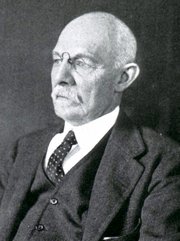
William S. Halsted, MD
(1852 – 1922)
American anatomist, teacher, and surgeon, William Stewart Halsted was born in New York City, USA to a wealthy family of English origin. His father was involved in charitable work and Governor and trustee to a city hospital. Not a brilliant student initially, Halsted took an undergraduate in Liberal Arts in Yale, CT., after which he entered the Medical College of Physicians at the Columbia College, where he excelled.
As a second-year medical student Halsted applied and obtained a position in surgery at a local hospital. In here he learned about Lister’s antiseptic technique and became an adamant proponent of it to reduce infection. In 1877 Halsted obtained his MD. After a short time as House Physician at the New York Hospital, Halsted traveled to Europe to further his education studying for two years at the Universities of Vienna, Leipzig, and W?rzburg.
Besides being at the forefront of surgical and antiseptic techniques (introducing the use of rubber gloves in surgery), Halsted was extremely concerned with the way medical students were taught in the US. He pioneered bedside clinical round discussions with the medical students after two years of basic sciences studies. Halsted developed the idea of a patient chart; he also developed the residency program for medical students in use today.
Halsted is probably the most influential researcher and surgeon at the turn of the century. He dedicated time to the study of intestinal anastomoses and the use of silk as a suture material. His experimental work in 1887 proved that the inclusion of the submucosa layer in an anastomosis was mandatory, as well that a single layered anastomosis was enough to attain closure. Perhaps Halsted’s most important contribution was the application and use of the scientific method to surgical questions. Halsted’s principles, also known as "Halsted's Rules of Surgery", set the standards used today in surgical suturing and surgical stapling.
He also pioneered the development and surgical techniques for radical mastectomy as a treatment for breast cancer.
As a side effect of this studied in anesthesia and the use of cocaine for anesthesia, Halsted became addicted to this substance, a problem that followed him through the years. Without impairing his capacity as a researcher and a surgeon, Halsted eventually recovered. He died in Baltimore in 1922 as a complication to surgery.
Sources:
1. Dubay, A. D., & Franz, G. M. (2003). Acute Wound Healing: The Biology of Acute Wound Failure. Surg Clin NA, 83, 463-481.
2. Halsted, W. S. (1887). Circular Suture of the Intestine - An Experimental Study. Am J Med Sci, 436-461.
3. “William Stewart Halsted: his life and contributions to surgery” Osborne, P. Lancet Oncol 2007; 8: 256–65
4. “William Stewart Halsted: Surgical pioneer” Burress, P Endoc Today (2010), 8: (2) 22
5. “William Stewart Halsted (1852–1922) Neurological stamp” Haas, LF J Neurol Neurosurg Psych 2000;69:641
Original image courtesy of "Images from the History of Medicine" at www.nih.gov

"Clinical Anatomy Associates, Inc., and the contributors of "Medical Terminology Daily" wish to thank all individuals who donate their bodies and tissues for the advancement of education and research”.
Click here for more information


- Details
This article is part of the series "A Moment in History" where we honor those who have contributed to the growth of medical knowledge in the areas of anatomy, medicine, surgery, and medical research.

Henry Koplik, MD
Henry Koplik, MD (1858 -1927). American pediatrician and researcher, was born in 1858 in the city of New York. He received his MD from the College of Physicians and Surgeons at the Colombia University in New York. He spent several years studying in Berlin, Vienna, and Prague. Upon his return to the US he worked at the lower Manhattan Good Samaritan dispensary, where he later built a large pediatric outpatient clinic which became a model for the care of infants and children. In fact, under Dr Koplik's direction, this clinic became the world's first "milk depot" providing fresh milk and infant food for underprivileged mothers in the area. Dr. Koplik was one of the founders of the American Pediatric Society, and was one of its presidents.
Mostly remembered by the pathognomonic and eponymic "Koplik's spots", Dr Koplik had many other achievements. Some of them include the prophylaxis of a milk depot, the strict discipline in diagnosis and care of the pediatric patient, the discovery of the bacillus responsible for whooping cough, the prevention of cross-contamination at a pediatric ward, etc.
Dr. Koplik wrote a number of clinical and research papers on hygiene and public health, as well on a number of medical topics, plus a book on "Diseases of Infancy and Childhood".
Sources:
1. "Koplik's Spots for the Record: an Illustrated Historical Note" Brem, J; Clin Ped 1972 11:3 161-163
2. "Pediatric Profiles: Henry Koplik (1858-1927)" Bass, MH J Ped 1957 119-125
3. "The History of the First Milk Depot or Gouttes de Lait With Consultations in America" JAMA 50: 1574, 1914.
4. "Some Pediatric Eponyms: Koplik's Spots," W. R. Bett Brit. J. Child.Dis. 28: 127, 1931
Original image in the public domain, courtesy of the National Institutes of Health.
- Details

Click for a larger image
The aortic arch is a segment of the aorta that arches from the midline towards posterior and to the left. It presents with three branches. From proximal to distal they are the brachiocephalic trunk, the left common carotid artery, and the left subclavian artery. There are several anatomical variations of the branches of the aortic arch.
There is no clear anatomical landmark to denote the ending of the ascending aorta and the beginning of the aortic arch, as there is no clear anatomical landmark to denote the ending of the aortic arch and the beginning of the descending aorta. Anatomists use as a reference a horizontal plane that passes through the angle of Louis. Since this plane also separates the inferior from the superior mediastinum, the aortic arch is found in the superior mediastinum, while the ascending and descending aorta are found in the inferior mediastinum.
The aortic arch has anatomical relations with the bifurcation of the trachea, the pulmonary trunk and its bifurcation, and the left brachiocephalic vein. In its inferior surface, the aortic arch in the adult has the embryological remnant of the ductus arteriousus, called the ligamentum arteriosum.
The term "aortic arch" was coined and first used by Lorenz Heister (1683 1785)
Image property of: CAA.Inc.. Artist: Victoria G. Ratcliffe
- Details
This is a medical root term that originates from the Greek and means "vessel", as in a "container". The term is commonly misunderstood to mean "artery". The original meanings of the term in early Greek and Roman medicine where multiple. It was Lorenz Heister (1683-1758) who first used the term in its modern meaning. Applications of this root term include:
- Angiology: Study of vessels
- Angioma: Vessel tumor or mass, usually referred to a malformation of knotted vessels. The plural form is "angiomata"
- Angioplasty: Reshaping of a vessel
- Angiitis: Inflammation of a vessel. Note the double "i" in the word. This is the correct form of the term. "Angitis" is not correct!
- Angiogenesis: Creation or generation of vessels
- Neoangiogenesis: The prefix [neo-] means [new], therefore the term means "creation or generation of new vessels"
- Cholangiogram: The prefix [chol-] means "bile", while the suffix [-ogram] means "examination of". A [cholangiogram] is the "examination of a bile vessel"
- Cineangiogram: The prefix [cine-] means "movement", although we use it to mean "movie", while the suffix [-ogram] means "examination of". A [cineangiogram] is the "examination of a vessel in movement"
- Details
This is a medical root term that originates from the Greek "arthron" which means "joint". The term is used in many medical words. Applications of this root term include:
- Arthrotomy: Opening of a joint
- Arthritis: Inflammation (or infection) of a joint
- Arthrology: Study of a joint
- Arthrodesis: Fixation of a joint
- Arthropathy: A disease affecting a joint
- Arthroplasty: Reshaping of a joint
- Arthroscopy: Visualizing inside a joint with a scope
As a side note: What is the plural form for arthritis? Hover your cursor over the word to see the answer
- Details
This article is part of the series "A Moment in History" where we honor those who have contributed to the growth of medical knowledge in the areas of anatomy, medicine, surgery, and medical research.

Charles H. McBurney, MD
Charles H. McBurney, MD (1845- 1913). British surgeon and anatomist, Dr. McBurney studied at Harvard University, and received his MD from the Colombia University in New York. At the forefront of the aseptic technique revolution, Dr. MacBurney, following Halsted's example, required the use of surgical gloves and strict aseptic technique in his operating room, considered the "first modern operating room in America"
His studies focused on appendicitis, and demonstrated a point of maximum tenderness at a point "exactly between an inch and a half and two inches from the anterior spinous process of the ileum on a straight line drawn between that process and the umbilicus". This point has become known as the eponymic "McBurney's point". There is a discrepancy between the original description of this point by McBurney and some medical publications. Continuing his research on the surgical approach to the inflamed vermiform appendix, in 1894 Dr. MacBurney presented an approach that used a small incision for appendectomy. This incision is know today as "McBurney's incision."
Sources:
1. "Charles Heber McBurney (1845 – 1913)" Yale,SH and Musana, KA Clin Med Res. 2005 August; 3(3): 187–189.
2. "Charles McBurney (1845–1913)—point, sign, and incision" JAMA 1966;197:1098–1099
3. "The first modern operating room in America" Clemons BJ AORN J. 2000 Jan;71(1):164-8, 170
Original image in the public domain, courtesy of the National Institutes of Health
- Details

Click for a larger image
The word [apex] is Latin and means "the top". It refers to the highest point in a mountain or in a pyramid; the point furthest from the base. The plural form is [apices]. There are several anatomical apices in the human body.
The cardiac apex (also known by the Latin term apex cordis) is a misunderstood term. It refers to the "top" of the heart, but this is clear only when you place the heart in such a way that the apex is actually pointing "up" (see image). In this position the heart is like a pyramid and the base will be the surface opposite the apex. The anatomical location of the apex of the heart is posterior to the left 5th intercostal space in adults, just medial to the left midclavicular line.
Image property of: CAA, Inc. Photographer: David M. Klein