
Medical Terminology Daily (MTD) is a blog sponsored by Clinical Anatomy Associates, Inc. as a service to the medical community. We post anatomical, medical or surgical terms, their meaning and usage, as well as biographical notes on anatomists, surgeons, and researchers through the ages. Be warned that some of the images used depict human anatomical specimens.
You are welcome to submit questions and suggestions using our "Contact Us" form. The information on this blog follows the terms on our "Privacy and Security Statement" and cannot be construed as medical guidance or instructions for treatment.
We have 483 guests online
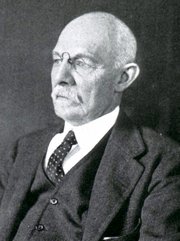
William S. Halsted, MD
(1852 – 1922)
American anatomist, teacher, and surgeon, William Stewart Halsted was born in New York City, USA to a wealthy family of English origin. His father was involved in charitable work and Governor and trustee to a city hospital. Not a brilliant student initially, Halsted took an undergraduate in Liberal Arts in Yale, CT., after which he entered the Medical College of Physicians at the Columbia College, where he excelled.
As a second-year medical student Halsted applied and obtained a position in surgery at a local hospital. In here he learned about Lister’s antiseptic technique and became an adamant proponent of it to reduce infection. In 1877 Halsted obtained his MD. After a short time as House Physician at the New York Hospital, Halsted traveled to Europe to further his education studying for two years at the Universities of Vienna, Leipzig, and W?rzburg.
Besides being at the forefront of surgical and antiseptic techniques (introducing the use of rubber gloves in surgery), Halsted was extremely concerned with the way medical students were taught in the US. He pioneered bedside clinical round discussions with the medical students after two years of basic sciences studies. Halsted developed the idea of a patient chart; he also developed the residency program for medical students in use today.
Halsted is probably the most influential researcher and surgeon at the turn of the century. He dedicated time to the study of intestinal anastomoses and the use of silk as a suture material. His experimental work in 1887 proved that the inclusion of the submucosa layer in an anastomosis was mandatory, as well that a single layered anastomosis was enough to attain closure. Perhaps Halsted’s most important contribution was the application and use of the scientific method to surgical questions. Halsted’s principles, also known as "Halsted's Rules of Surgery", set the standards used today in surgical suturing and surgical stapling.
He also pioneered the development and surgical techniques for radical mastectomy as a treatment for breast cancer.
As a side effect of this studied in anesthesia and the use of cocaine for anesthesia, Halsted became addicted to this substance, a problem that followed him through the years. Without impairing his capacity as a researcher and a surgeon, Halsted eventually recovered. He died in Baltimore in 1922 as a complication to surgery.
Sources:
1. Dubay, A. D., & Franz, G. M. (2003). Acute Wound Healing: The Biology of Acute Wound Failure. Surg Clin NA, 83, 463-481.
2. Halsted, W. S. (1887). Circular Suture of the Intestine - An Experimental Study. Am J Med Sci, 436-461.
3. “William Stewart Halsted: his life and contributions to surgery” Osborne, P. Lancet Oncol 2007; 8: 256–65
4. “William Stewart Halsted: Surgical pioneer” Burress, P Endoc Today (2010), 8: (2) 22
5. “William Stewart Halsted (1852–1922) Neurological stamp” Haas, LF J Neurol Neurosurg Psych 2000;69:641
Original image courtesy of "Images from the History of Medicine" at www.nih.gov

"Clinical Anatomy Associates, Inc., and the contributors of "Medical Terminology Daily" wish to thank all individuals who donate their bodies and tissues for the advancement of education and research”.
Click here for more information


- Details
This article is part of the series "A Moment in History" where we honor those who have contributed to the growth of medical knowledge in the areas of anatomy, medicine, surgery, and medical research.
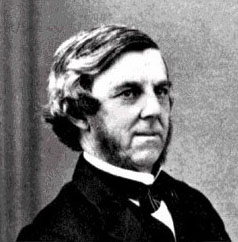
Oliver W. Holmes Sr.
Oliver W. Holmes Sr. (1809-1894). American physician, writer, and poet, Oliver Wendell Holmes Sr. was born in 1809 in Cambridge, MA. He started his studies in law, but soon turned to Medicine, studying part of his time in Paris. In 1843 he joined the fight against "puerperal fever", for which he was mocked, but he stood his ground on principle. A gifted writer, he published several books on essays, biography, and poetry. He was Dean of the Harvard Medical School. He received several honorary doctorates in Law and letters from Harvard and Cambridge. Little known is his contribution to Medicine by the coining of the terms "anesthesia" and "anesthetic", and that he was the father of a Supreme Court Judge, Justice Oliver Wendell Homes Jr.
The Journal of Clinical Anatomy published an article on Oliver W. Holmes Sr. profiling his many accomplishments.
Original image courtesy of www.nndb.com.
Sources:
1. "The Origin of Medical Terms" Skinner, H.A.(1970)
2. "Oliver Wendell Holmes, Sr. (1809–1894): Physician, jurist, poet, inventor, pioneer, and anatomist" Tubbs, RS et al, Clin Anat 25:8; 992-997 (2012)
- Details

Click for a larger image
The origin or etymology of the word [omentum] is not clear. The plural form is [omenta] and it refers to membranes associated with the stomach. The term was first used by Galen and later by Celsus. It was Andrea Vesalius who gave us the first clear anatomical description of the omenta.
The omenta are double-layered peritoneal membranes. There are two omenta. The lesser omentum ("Lo" in the image) extends between the liver and stomach, and liver and the first part of the duodenum. The greater omentum ("Go" in the image) projects off the stomach, reaches as low as the lower abdominal cavity and reflects superiorly to connect with the transverse colon. The greater omentum contains a larger amount of fat than the lesser omentum.
Both omenta contain a number of arteries, veins, and other structures between their layers. In the case of the greater omentum, we find the right and left gastroepiploic arteries as well as the greater curvature vascular arcade.
Image property of: CAA, Inc. Photographer: David M. Klein
- Details
This article is part of the series "A Moment in History" where we honor those who have contributed to the growth of medical knowledge in the areas of anatomy, medicine, surgery, and medical research.

Theodor Billroth
Christian Albert Theodor Billroth (1829-1894) was born in Prussia, in the city of Bergen. After being considered a slow learner requiring tutoring at home, Billroth studied Medicine in Berlin. In 1860 he was appointed as Professor of Clinical Surgery.
He is well-know by the partial or subtotal gastric resection surgeries he pioneered. In 1881 he performed the first of what is now known as a "Billroth I" procedure. He was the first to perform a partial resection and anastomosis of the esophagus, as well as the first surgeon to excise a rectal cancer. He is considered one of the Masters of Surgery.
Billroth was also a gifted musician playing the violin and viola. Good friend with Johannes Bramhs, he was sometimes invited to conduct the Zurich Symphonic Orchestra.
The first Billroth I procedure was performed in 1881 in a 43 year old female. Besides the well-known Billroth I and Billroth II subtotal gastrectomies, there are several eponyms that carry Billroth's name. Billroth's concepts on gastrointestinal anastomoses paved the way for the invention of surgical staplers.
Source:
"Christian Albert Theodor Billroth: Master of surgery" Kazi, RA; Peter, RE, J Postgrad Med March 2004 50:1, 82-83
Original image courtesy of Images from the History of Medicine at nih.gov
- Details

Click for a larger image
The Latin word [femur] means "thigh". the femur is the bone of the thigh, and this is why the anatomical region of the thigh is known as the "femoral region".
The femur is a long bone and has several anatomical characteristics such as a head (which articulates with the pelvic bone), a neck, a small and a large trochanter, and two condyles for articulation with the tibia at the knee joint.
For a detailed description of the anatomy of the femur, click here. Click on the image for a larger view.
Links courtesy ofbartleby.com
Original image modified from Andrea Vesalius' "De Humani Corporis Fabrica, Libri Septem"
- Details
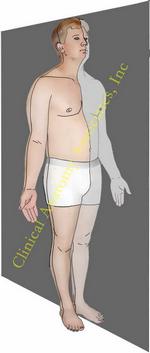
The definition of a geometrical plane is "a surface defined by a minimum of three points". By definition, a plane is imaginary. The [median plane] is "a vertical plane that divides the human body standing in the anatomical position in two halves, left and right, that are equal in size" (although not in content).
The term "midline" is a bit of a misnomer, as this is a plane and not a line, although if you look at the median plane from the anterior or posterior aspect of an individual in the anatomical position, you would have a line, ergo, midline!
To visualize the above statement, click on this "anatomical position" link and hover your mouse over the image. The midline will appear.
Another term that can be used synonymously with [midline] or [median plane] is that of "midsagittal plane". Any plane that is parallel to the midsagittal plane (therefore not on the median plane) can be called either "sagittal" or "parasagittal".
Since planes are imaginary, the only way to make them real is to cut, section, or image following a plane, this is called a "plane of section"
Image property of: CAA.Inc. Artist: Victoria G. Ratcliffe
- Details
This article is part of the series "A Moment in History" where we honor those who have contributed to the growth of medical knowledge in the areas of anatomy, medicine, surgery, and medical research.

Antonio Scarpa
Antonio Scarpa (1752-1832). An Italian physician and anatomist, Antonio Scarpa is probably most remembered by the many human anatomy eponymic structures named after him, like "Scarpa's Fascia". Arising from humble origins, a very young Scarpa started medical studies at the University of Padua and obtained his doctorate at 18 years of age.
In 1772 he published a detailed anatomical study of the middle and internal ear, and later continued with animal comparative studies, surgical studies, and discoveries such as the innervation of the heart, and introduced the concept of arteriosclerosis. He left behind a solid group of books and publications
Known for his aggressive personality, Scarpa is said to have had more enemies than friends. After his death, his head was preserved and is still on display today at the History Museum of the University of Pavia, in Italy. Click here for a YouTube video depicting Scarpa's life and his head on display (Italian)
Antonio Scarpa was one of the first to describe the cochlea, one of the components of the inner ear
Originall image courtesy of Maurir, Public domain, via Wikimedia Common