
Medical Terminology Daily (MTD) is a blog sponsored by Clinical Anatomy Associates, Inc. as a service to the medical community. We post anatomical, medical or surgical terms, their meaning and usage, as well as biographical notes on anatomists, surgeons, and researchers through the ages. Be warned that some of the images used depict human anatomical specimens.
You are welcome to submit questions and suggestions using our "Contact Us" form. The information on this blog follows the terms on our "Privacy and Security Statement" and cannot be construed as medical guidance or instructions for treatment.
We have 431 guests online
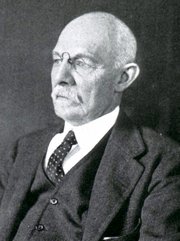
William S. Halsted, MD
(1852 – 1922)
American anatomist, teacher, and surgeon, William Stewart Halsted was born in New York City, USA to a wealthy family of English origin. His father was involved in charitable work and Governor and trustee to a city hospital. Not a brilliant student initially, Halsted took an undergraduate in Liberal Arts in Yale, CT., after which he entered the Medical College of Physicians at the Columbia College, where he excelled.
As a second-year medical student Halsted applied and obtained a position in surgery at a local hospital. In here he learned about Lister’s antiseptic technique and became an adamant proponent of it to reduce infection. In 1877 Halsted obtained his MD. After a short time as House Physician at the New York Hospital, Halsted traveled to Europe to further his education studying for two years at the Universities of Vienna, Leipzig, and W?rzburg.
Besides being at the forefront of surgical and antiseptic techniques (introducing the use of rubber gloves in surgery), Halsted was extremely concerned with the way medical students were taught in the US. He pioneered bedside clinical round discussions with the medical students after two years of basic sciences studies. Halsted developed the idea of a patient chart; he also developed the residency program for medical students in use today.
Halsted is probably the most influential researcher and surgeon at the turn of the century. He dedicated time to the study of intestinal anastomoses and the use of silk as a suture material. His experimental work in 1887 proved that the inclusion of the submucosa layer in an anastomosis was mandatory, as well that a single layered anastomosis was enough to attain closure. Perhaps Halsted’s most important contribution was the application and use of the scientific method to surgical questions. Halsted’s principles, also known as "Halsted's Rules of Surgery", set the standards used today in surgical suturing and surgical stapling.
He also pioneered the development and surgical techniques for radical mastectomy as a treatment for breast cancer.
As a side effect of this studied in anesthesia and the use of cocaine for anesthesia, Halsted became addicted to this substance, a problem that followed him through the years. Without impairing his capacity as a researcher and a surgeon, Halsted eventually recovered. He died in Baltimore in 1922 as a complication to surgery.
Sources:
1. Dubay, A. D., & Franz, G. M. (2003). Acute Wound Healing: The Biology of Acute Wound Failure. Surg Clin NA, 83, 463-481.
2. Halsted, W. S. (1887). Circular Suture of the Intestine - An Experimental Study. Am J Med Sci, 436-461.
3. “William Stewart Halsted: his life and contributions to surgery” Osborne, P. Lancet Oncol 2007; 8: 256–65
4. “William Stewart Halsted: Surgical pioneer” Burress, P Endoc Today (2010), 8: (2) 22
5. “William Stewart Halsted (1852–1922) Neurological stamp” Haas, LF J Neurol Neurosurg Psych 2000;69:641
Original image courtesy of "Images from the History of Medicine" at www.nih.gov

"Clinical Anatomy Associates, Inc., and the contributors of "Medical Terminology Daily" wish to thank all individuals who donate their bodies and tissues for the advancement of education and research”.
Click here for more information


- Details
Click for a larger image
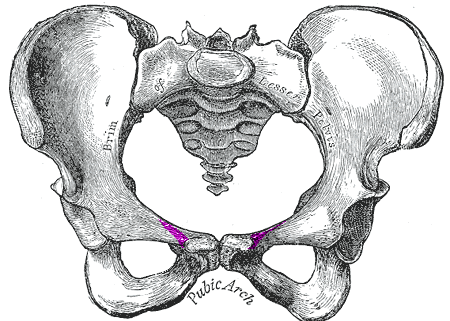
The pectineal line of the pubis is a sharp bony ridge located on the superior ramus of the pubic bone, forming part of the pelvic brim.
The pectineal line of the pubis begins at the pubic tubercle and extends posterolaterally for a short (variable) distance. As it moves posterolaterally its height shortens until it dissapears.
This structure serves as the superior origin of the pectineus muscle. The inferior attachment of this muscle is the pectineal line of the femur.
The periostium over the pectineal line of the pubis is thicker and reinforced by collagenous fibers from the lacunar ligament (Gimbernat's) and the inguinal ligament (Poupart's), forming the pectineal ligament, also known as Cooper's ligament.
Images in the public domain, courtesy of Wikipedia
- Details
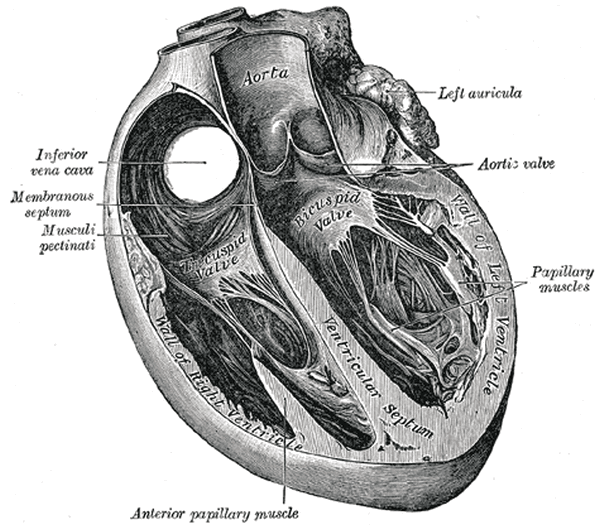
Axial cross-section of the heart
This term is of Latin origin and means "nipple". The plural form of [papilla] is [papillae]. It was first used to describe the renal papillae.
The term [papillary] refers to a structure that resembles a nipple. Some of the uses of the term are:
- Papillary muscle: Muscles of the internal cardiac wall (see image)
- Duodenal papilla: A nipple-like projection in the internal wall of the descending duodenum caused by the hepatopancreatic ampulla (of Vater), also know as the major papilla
- Parotid papilla: An elevation of the buccal mucosa caused by the opening of duct of the parotid salivary gland.
The image shows a section of the heart along its long axis. For a larger view, click on the image
Source:
1. "Anatomy of the Human Body" Henry Gray 1918. Philadelphia: Lea & Febiger
2 "Tratado de Anatomia Humana" Testut et Latarjet 8 Ed. 1931 Salvat Editores, Spain
Original image in the public domain, by Henry VanDyke Carter, MD, courtesy of bartleby.com
- Details
The medical term [prognosis] is composed by the the Greek prefix [pro-] meaning "forward" and the root term [-gnos-], a derivative of the Greek [γνώση] which means "knowledge".
Prognosis is then "forward knowledge", an statement of outcome of the course of a pathology.
Words suggested by:Sara Mueller
- Details
The word [cava] is of Latin origin, arising from the word [cavus] meaning "hollow". The plural form for cava is cavae.
The term is used in human anatomy to name the superior vena cava and the inferior vena cava. Both vena cavae empty into the right atrium of the heart. It is incorrect to refer to both vena cavae as "vena cavas".
The derived root term fom [cavus] is [-cav-] meaning "hollow" or "cavern" and can be found in everyday terms such as "cavern","cavernous", and "excavate" (to hollow out). In human anatomy besides the vena cavae, there are the cavernous sinuses, the cavoatrial junction, etc.
- Details
This article is part of the series "A Moment in History" where we honor those who have contributed to the growth of medical knowledge in the areas of anatomy, medicine, surgery, and medical research.
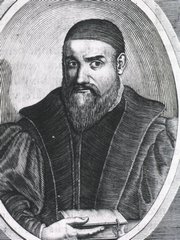
Gabrielle Fallopius
Gabrielle Fallopius (1523 - 1563) also known as Gabrielle Falloppia, was born close to Modena, Italy. He was for some years a priest in the service of the Church, among others as a at Modena's cathedral, but soon turned to medicine. He received his medical degree in 1548 from the University of Ferrara when he was only 25 years old. A professor of human anatomy and surgery at the University of Padua, he was (as Vesalius) critical of the anatomy of Galen. He is known for his accurate description of the uterine tubes, salpinx, or oviducts, which carry his eponym, as the "Fallopian tubes".
His anatomical studies were focused on the anatomy on the head, where he added much to the knowledge of the internal ear and the ethmoid bone.
Less known is the accurate description he made of the inguinal ligament, later named after Francois Poupart. He published only one book during his lifetime, the "Observationes Anatomicae" in 1561. His collected works were published after his death.
Original image in the public domain, courtesy of Images from the History of Medicine
- Details
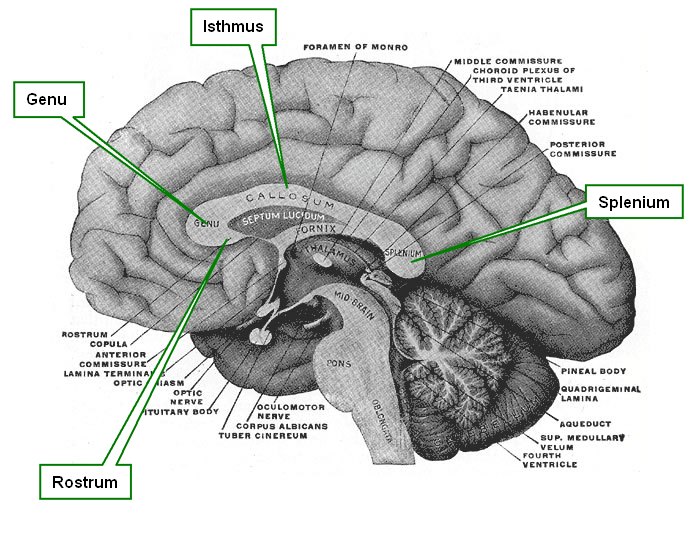
Median section of the brain
The term [corpus callosum] is Latin. The word [corpus] means "body", while the term [callosum] derives from [callosus] meaning "callous" or a structure with a hard consistency.
The corpus callosum is the largest of the nine interhemispheric commisures of the brain. It is formed by white matter consisting of axons that communicate both cerebral hemispheres. The corpus callosum is formed by several components:
• Rostrum: an anteroinferior region that resembles a bird's beak
• Genu: Latin for "knee", the genu is formed mostly by interfrontal fibers. These fibers form the anterior fornix
• Isthmus:also known as the "body" or "trunk", it is the main portion of the corpus callosum, allowing for interparietal and intertemporal communication
• Splenium: Latin for "bandage" the splenium allows for interhemispheric communication between the parietal, temporal, and occipital lobes. The fibers of the splenium form the posterior fornix
The image shown is a median section of the brain. Click on the image for a larger depiction. For a superior view of the corpus callosum click here.
Sources:
1 "Tratado de Anatomia Humana" Testut et Latarjet 8 Ed. 1931 Salvat Editores, Spain
2. "Anatomy of the Human Body" Henry Gray 1918. Philadelphia: Lea & Febiger
Image modified by CAA, Inc, Original image courtesy of bartleby.com