
Medical Terminology Daily (MTD) is a blog sponsored by Clinical Anatomy Associates, Inc. as a service to the medical community. We post anatomical, medical or surgical terms, their meaning and usage, as well as biographical notes on anatomists, surgeons, and researchers through the ages. Be warned that some of the images used depict human anatomical specimens.
You are welcome to submit questions and suggestions using our "Contact Us" form. The information on this blog follows the terms on our "Privacy and Security Statement" and cannot be construed as medical guidance or instructions for treatment.
We have 673 guests online
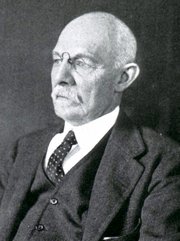
William S. Halsted, MD
(1852 – 1922)
American anatomist, teacher, and surgeon, William Stewart Halsted was born in New York City, USA to a wealthy family of English origin. His father was involved in charitable work and Governor and trustee to a city hospital. Not a brilliant student initially, Halsted took an undergraduate in Liberal Arts in Yale, CT., after which he entered the Medical College of Physicians at the Columbia College, where he excelled.
As a second-year medical student Halsted applied and obtained a position in surgery at a local hospital. In here he learned about Lister’s antiseptic technique and became an adamant proponent of it to reduce infection. In 1877 Halsted obtained his MD. After a short time as House Physician at the New York Hospital, Halsted traveled to Europe to further his education studying for two years at the Universities of Vienna, Leipzig, and W?rzburg.
Besides being at the forefront of surgical and antiseptic techniques (introducing the use of rubber gloves in surgery), Halsted was extremely concerned with the way medical students were taught in the US. He pioneered bedside clinical round discussions with the medical students after two years of basic sciences studies. Halsted developed the idea of a patient chart; he also developed the residency program for medical students in use today.
Halsted is probably the most influential researcher and surgeon at the turn of the century. He dedicated time to the study of intestinal anastomoses and the use of silk as a suture material. His experimental work in 1887 proved that the inclusion of the submucosa layer in an anastomosis was mandatory, as well that a single layered anastomosis was enough to attain closure. Perhaps Halsted’s most important contribution was the application and use of the scientific method to surgical questions. Halsted’s principles, also known as "Halsted's Rules of Surgery", set the standards used today in surgical suturing and surgical stapling.
He also pioneered the development and surgical techniques for radical mastectomy as a treatment for breast cancer.
As a side effect of this studied in anesthesia and the use of cocaine for anesthesia, Halsted became addicted to this substance, a problem that followed him through the years. Without impairing his capacity as a researcher and a surgeon, Halsted eventually recovered. He died in Baltimore in 1922 as a complication to surgery.
Sources:
1. Dubay, A. D., & Franz, G. M. (2003). Acute Wound Healing: The Biology of Acute Wound Failure. Surg Clin NA, 83, 463-481.
2. Halsted, W. S. (1887). Circular Suture of the Intestine - An Experimental Study. Am J Med Sci, 436-461.
3. “William Stewart Halsted: his life and contributions to surgery” Osborne, P. Lancet Oncol 2007; 8: 256–65
4. “William Stewart Halsted: Surgical pioneer” Burress, P Endoc Today (2010), 8: (2) 22
5. “William Stewart Halsted (1852–1922) Neurological stamp” Haas, LF J Neurol Neurosurg Psych 2000;69:641
Original image courtesy of "Images from the History of Medicine" at www.nih.gov

"Clinical Anatomy Associates, Inc., and the contributors of "Medical Terminology Daily" wish to thank all individuals who donate their bodies and tissues for the advancement of education and research”.
Click here for more information


- Details
Click for a larger image
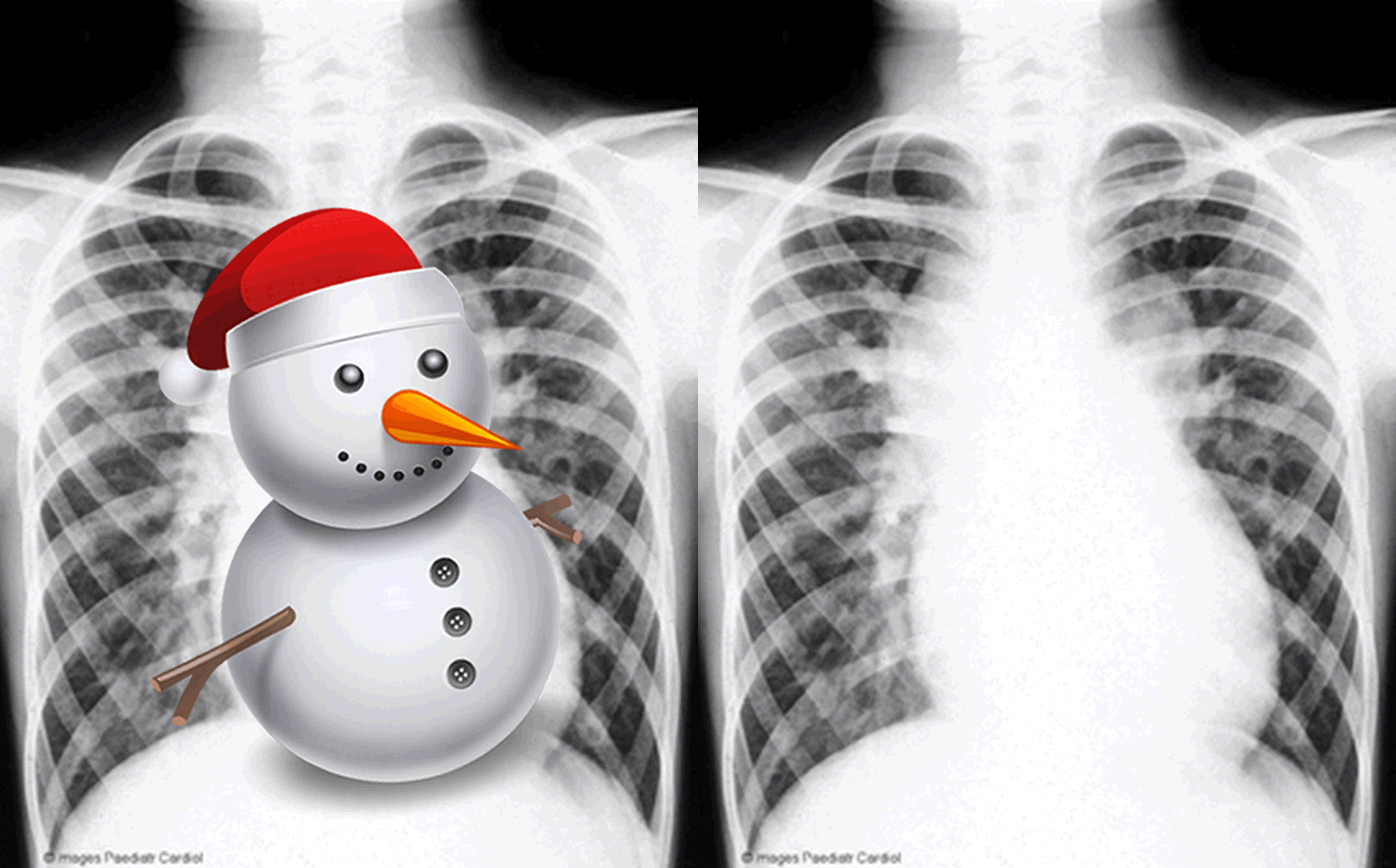
The “snowman sign” is a particular image on a chest X-Ray image, which is seen in anomalous pulmonary venous drainage and coarctation of the aorta which causes a Total Anomalous Pulmonary Venous Return (TAPVR).
This abnormality occurs when the pulmonary veins fail to drain into the left atrium and instead form an aberrant connection with some others cardiovascular structures. Such abnormalities account for approximately 2% of cardiac malformations.
There are four types of TAPVR; type 1 is the most common (and the one that creates the snowman sign). In this case the pulmonary veins terminate at the supracardiac level, emptying into the right atrium by way of an anomalous pulmonary venous drainage into the superior vena cava (SVC), and the left brachiocephalic vein (by way of a vertical vein). The confluence of these veins dilates the right brachiocephalic vein, which appears as a dilated vessel on the right of the upper mediastinal edge. When seen in an AP Chest X-Ray, the TAPVAR type 1, resembles a snowman; the dilated vertical vein on the left, the right brachiocephalic vein superiorly, and the SVC on the right form the head of the snowman, the body is formed by the enlarged right atrium.
Article written by: Prof. Claudio R. Molina, MsC.
Sources:
1. Emma C. Ferguson, Rajesh Krishnamurthy, and Sandra A. A. Oldham. (2007) Classic Imaging Signs of Congenital Cardiovascular Abnormalities. RadioGraphics 27:5, 1323-1334.
2. Somerville, J., & Grech, V. (2009). The chest x-ray in congenital heart disease 1. Total anomalous pulmonary venous drainage and coarctation of the aorta. Images in Paediatric Cardiology, 11(1), 7–9.
- Details
Click for a larger image
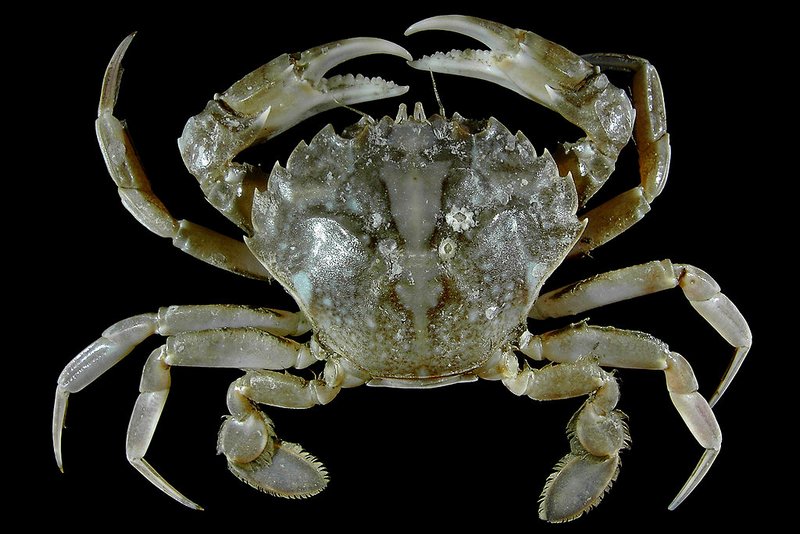
Kabourophobia is the fear of crabs and lobsters.
The etymology of the word [kabourophobia] comes from the Greek word [καβουρης] (pronounced “kavouris”), meaning [crab], and the suffix [-phobia], also from the Greek, arises from the word [φοβία] (pronounced “fovía”)
Kabourophobia is an extremely rare phobia, but it was brought to the public’s attention when a modern pop singer stated that she was afraid of crabs. Also, a prank (maybe acted) was shown on video on the internet with a man surrounded by lobsters.
Kabourophobia is very specific, and it can also be a part of a wider phobia called ostraconophobia, which is the fear of crustaceans, adding shrimp, oysters, clams, crabs, lobsters, etc.
An interesting point is that the word [crab] in Greek has another acception, that is the word [Καρκίνος] (pronounced “karkinos”), which is the root for the medical term [cancer].
We thank Jackie Miranda-Klein for her contribution suggesting this word.
- Details
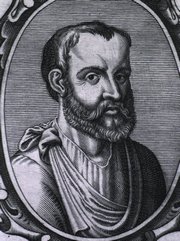
Galen of Pergamon
(129AD - 200AD
The word sympathetic is the adjectival form of sympathy. This word arises from the Greek [συμπάθεια]and is composed of [syn/sym] meaning “together” and [pathos], a word which has been used to mean “disease”. In reality “pathos” has to do more with the “feeling of self”. Based on this, the word sympathy means “together in feeling”, which is what we use today.
How the term got to be used to denote a component of the so-called autonomic nervous system is part of the history of Medicine and Anatomy.
Galen of Pergamon (129AD-200AD), whose teachings on Medicine and Anatomy lasted as indisputable for almost 1,500 years, postulated that nerves were hollow and allowed for “animal spirits” to travel between organs and allowed the coordinated action of one with the other, in “sympathy” with one another. As the knowledge of the components of the nervous system grew, this concept of “sympathy” stayed, becoming a staple of early physiological theories on the action of the nervous system.
Jacobus Benignus Winslow (1669-1760) named three “sympathetic nerves” one of them was the facial nerve (the small sympathetic), the other the vagus nerve, which he called the “middle sympathetic”, and the last was what was known then as the “intercostalis nerve of Willis” or “large sympathetic", today’s sympathetic chain. Other nerves that worked coordinated with this “sympathetics” were considered to work in parallel with it. It is from this concept that the term “parasympathetic” arises.
Interestingly, the ganglia on the sympathetic chain were for years known as “small brains” and it was postulated that there was a separate multi-brain system coordinating the action of the thoracic and abdominopelvic viscera. The coordination between this “autonomous nervous system” and the rest of the body was made by way of the white and gray rami communicantes.
Today we know that there is only one brain and only one nervous system with an autonomic component which has a “sympathetic” component that is mostly in charge of the “fight or flight” reaction and a “parasympathetic” component that has a “slow down” or “depressor” function. Both work coordinated, so I guess Galen was not "off the mark" after all.
So, we still use the terms “sympathetic” and “parasympathetic”, but the origin of these terms has been blurred by history.
Sources:
1. "Claudius Galenus of Pergamum: Surgeon of Gladiators. Father of Experimental Physiology" Toledo-Pereyra, LH; Journal of Investigative Surgery, 15:299-301, 2002
2. "The Origin of Medical Terms" Skinner, HA 1970 Hafner Publishing Co.
3. "Medical Meanings:A Glossary of Word Origins" Haubrish, WS American College of Physicians Philadelphia, 1997
4. "The History of the Discovery of the Vegetative (Autonomic) Nervous System" Ackerknecht, EH Medical History, 1974 Vol 18.
Original image courtesy of Images from the History of Medicine at nih.gov
Note: The links to Google Translate include an icon that will allow you to hear the pronunciation of the word.

- Details
The medical term [epistaxis] refers to a “nose bleed”.
It is considered to be a Modern Latin term that originates from the Greek word [επίσταξη] (epístaxí). The word is composed of [επί] [epi-] meaning "on", "upon", or "above", and [στάζει] (stázei), meaning "in drops", "dripping".
The term was first used by Hippocrates, but only as [στάζει] , to denote dripping of the nose, and was later changed to [επίσταξη] to denote “dripping upon”. The term itself does not include or denote that the blood loss is from the nose, but its meaning has been implied and accepted for centuries. The plural form for epistaxis is epistaxes.
Skinner (1970) says that the term was first used in English in a letter by Thomas Beddoes (1760-1808) in a letter to Robert W. Darwin (1766-1848) in 1793. Robert Darwin was an English physician, father or Charles Darwin (1809-1882) author of “The Origin of the Species”.
Sources:
1. "The Origin of Medical Terms" Skinner, HA 1970 Hafner Publishing Co.
2. "Medical Meanings - A Glossary of Word Origins" Haubrich, WD. ACP Philadelphia
Note: The links to Google Translate include an icon that will allow you to hear the pronunciation of the word.
- Details

Click for a larger image
Kiesselbach's plexus is named after Dr. Wilhelm Kiesselbach (1839 – 1902), a German otolaryngologist. It is an area in the anteroinferior aspect of the nasal septum where several arteries from different origins meet and anastomose.
This arterial plexus is also known as the "locus Kiesselbachii, Kiesselbach's triangle, or Little's plexus, or Little's area. This area of the anteroinferior nasal septum has a propensity for epistaxis or nasal bleeding. In fact, close to 90% of nose bleeds (epistaxes) happen in this area.
There is a secondary area where epistaxis may happen, but this is a venous nose bleed. This is Woodruff's plexus, a venous plexus found in the posterior aspect of inferior turbinate on the lateral wall of the nose.
Thanks to Jackie Miranda-Klein for suggesting this post.
- Details
- Written by: Efrain A. Miranda, Ph.D.
This article is part of the series "A Moment in History" where we honor those who have contributed to the growth of medical knowledge in the areas of anatomy, medicine, surgery, and medical research.
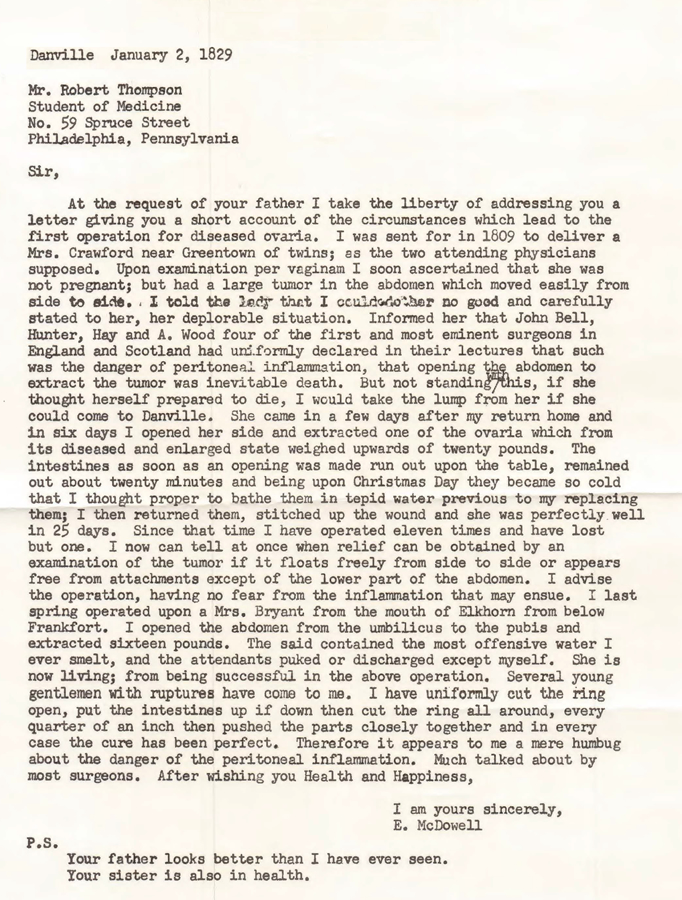
Letter from Ephraim McDowell
to Robert Thompson
As some of you may know by now, I am a collector of antique medical books and books that relate to the history of anatomy and medicine.
As important as the books themselves are, there are details beyond the book itself that can take hours of my time doing research. The first one is the bookplates (also known as Ex-Libris). The have been used for centuries by book owners and collectors to identify the books in their collections, a tradition that seems to be falling in disuse. Not me, I have one that you can see here. Some of these can lead to places that you cannot imagine initially. One of these bookplates took me to research a potential resident ghost in a library!
Provenance is also important. Where was it printed? Who owned it? Who was the illustrator? etc. I recently acquired a second copy of the book “EPHRAIM MCDOWELL, FATHER OF OVARIOTOMY AND FOUNDER OF ABDOMINAL SURGERY. With an Appendix on JANE TODD CRAWFORD”. By AUGUST SCHACHNER, M.D. Cloth, 8vo.A p. 33I. Philadelphia, J. B. Lippincott CO., I921. Dr. McDowell has also been featured in this blog in the series "A Moment in History".
This second copy is most valuable because of the papers found within the book. There is a series of notes, newspaper clippings, and copies of letters! Here is a detail of what I have found:
The book seems to have belonged to Cecil Stryker, MD.,a physician in Cincinnati, and one of the founders of the American Diabetes Association (ADA). There is a copy of a letter by Dr. Ephraim McDowell to Dr. Robert Thompson (Sr.) dated January 2nd, 1829, a year before Dr. McDowell's death. The letter is shown in the image attached. In this letter Dr. McDowell describes in his own words the ovariotomy he performed on Jane Todd. He also describes other ovariotomies he performed and his opinion on "peritoneal inflammation".
There is a note from Dr. Cecil Striker to "Bob" dated 6/3/73 when he gifted a copy of this book. In the note Dr. Striker explains that he bought several copies of the book and he is sending this copy to him. There is also a copy of Dr. McDowell's prayer (costs 25 cents), and a page of the Kentucky Advocate newspaper published in Danville, KY and dated Sunday April 15, 1973 on the restoration of Dr. Alban Goldsmith home, a surgeon who assisted Dr. McDowell in his first ovariotomy (first in the world, that is).
Last, there is a note dated September 16, 1974 from the wife of Dr. West T. Hill, Chairman of the Dramatic Arts Department at Centre College in Danville, Kentucky. In this handwritten note she mentions the McDowell family reunion that took place on June 15 and 16, 1974 in Danville. With the note comes the program and registration form for the festivities! Dr. West T. Hill was one of the many responsible for the restoration of the MacDowell Home and Museum. Today Danville has the West T. Hill community theatre that honors his name.
All of this in one book, as I always say "You know where you are going to start reading it, but you never know where are you going to end in researching it". This book will be a great addition to my library catalog. Dr. Miranda.